


Language
ENG
Enter Keywords...

NEW

3/8 BSPT Pipe Thread Dimensions: Complete Guide for Hydraulic Fittings
 2026.09.14
 industy news
You have a hydraulic port marked 3/8 and a hose assembly that will not attach. Before you scroll through a catalog, the thread form on the port has to be confirmed. If it is 3/8 BSPT, the dimensions that matter are 19 threads per inch, a 1.337 mm pitch, a 16.662 mm major diameter and a 1:16 taper. These values are the whole answer for machining, but sealing depends on how the taper is seated. This guide explains what those numbers mean on the shop floor and what to verify before you place an order.
3/8 BSPT Thread Dimensions: The Complete Data Set
The 3/8 BSPT thread is designated R 3/8 in international standards and is defined by ISO 7-1. It is a tapered pipe thread, which means the diameter grows as the thread moves from the tip toward the fitting body. The gauge plane is the reference point for all dimensional limits.
| Parameter | Value | Unit |
|---|---|---|
| Thread size | 3/8 | inch |
| Threads per inch | 19 | TPI |
| Pitch | 1.337 | mm |
| Major diameter | 16.662 | mm |
| Pitch diameter | 15.806 | mm |
| Minor diameter | 14.950 | mm |
| Tap drill | 15.00 | mm |
| Thread angle | 55 | degree |
| Taper | 1:16 | ratio |
| Gauge length | 3.7 | mm |
The pitch of 1.337 mm and the 19 TPI are the same value expressed two ways. If you have a thread gauge, placing a 1.337 mm pitch gauge or a 19 TPI gauge against the thread flank confirms the profile. The major diameter of 16.662 mm is the theoretical maximum for the external thread at the gauge plane. A slightly smaller reading is normal because the tolerance band allows a few hundredths of a millimeter of production variation.
How the 1:16 Taper Creates a Pressure-Tight Joint
The taper ratio in BSPT is fixed at 1 in 16. That means for every 16 mm of thread length, the diameter changes by 1 mm. For a 3/8 BSPT, the functional consequence is a gradual wedge action as the male thread advances into the female port. The thread flanks make contact along the thin edge of the taper, and the material deflection from tightening torque closes the seal.
This sealing mechanism is different from a parallel thread. A BSPP female port has no taper and requires a gasket, O-ring or flat face washer to hold pressure. A 3/8 BSPT male does not seal against the root of the thread; it seals at the flank angle. If the flank surface is damaged or plated unevenly, the wedge can leak even if the thread diameter is within tolerance.
What happens when the taper is misapplied
If you replace 3/8 BSPT with a parallel 3/8 BSPP fitting, the male thread will travel too far into the port and reach the bottom of the hole with no wedging force. The joint may hold a few bar of pressure while the system is idle, then weep as soon as hydraulic pressure and temperature rise. In contrast, threading a 3/8 NPT fitting into a BSPT port causes pitch interference. NPT has 18 TPI at this size while BSPT has 19 TPI, so a full thread of deviation develops across the engagement length.
3/8 BSPT vs BSPP vs NPT: Key Differences
Procurement teams compare these three thread forms more often than any other combination. The same 3/8 nominal size appears in all three, but pitch and thread angle separate them immediately.
| Feature | BSPT | BSPP | NPT |
|---|---|---|---|
| Threads per inch | 19 | 19 | 18 |
| Thread angle | 55 degree | 55 degree | 60 degree |
| Taper | 1:16 | Parallel | 1:16 |
| Nominal major diameter | 16.662 mm | 16.662 mm | 17.145 mm |
| Seal method | Thread wedge | Gasket or O-ring | Thread wedge |
| Standard | ISO 7-1 | ISO 228 | ANSI/ASME B1.20.1 |
The 17.145 mm major diameter for 3/8 NPT is a strong visual identifier. Even if you cannot measure the thread angle, you can distinguish NPT from BSPT by measuring the outer diameter. A 3/8 BSPT male is roughly 16.66 mm while a 3/8 NPT male is closer to 17.15 mm at the gauge plane, which is nearly 0.5 mm larger.
BSPP is the most likely mix-up because its pitch is identical to BSPT. The only way to tell them apart without measuring is the taper. Run a caliper over the thread at two points 10 mm apart. If the diameter is constant, it is BSPP. If it grows toward the fitting head, it is BSPT.
Identifying a 3/8 BSPT Port or Fitting in the Workshop
When there is no label and no drawing, three checks settle the question.
- Count the thread peaks over a one-inch length. For 3/8 BSPT, you should count 19 full peaks.
- Measure the major diameter on the external male thread near the gauge plane. A 3/8 BSPT reading should be close to 16.66 mm.
- Test the flank angle with a 55 degree thread gauge. If the gauge sits flat and has no visible gap at the root, it is BSPT or BSPP. A 60 degree gauge will wobble or leave a knife-edge gap.
For a female port, the tap drill size is a useful clue. A 15.0 mm drill is the recommended tap drill for a 3/8 BSPT hole. If the drawing specifies a 14.5 mm drill, the port is likely intended for NPT or a different tolerance class. A slight difference in drill size changes the percentage of thread engagement and affects how much torque is needed to make the joint pressure tight.
In practice, 3/8 BSPT ports appear on pump covers, valve bodies, manifold blocks and hose assemblies in hydraulic circuits and pneumatic systems. The thread form itself does not define a pressure limit; the wall thickness of the fitting, material grade and working pressure of the system determine the rating. For a metal-to-metal tapered seal, a 3/8 BSPT is a compact and reliable way to connect a soft hose to a rigid port.
Sourcing 3/8 BSPT Fittings Without the Guesswork
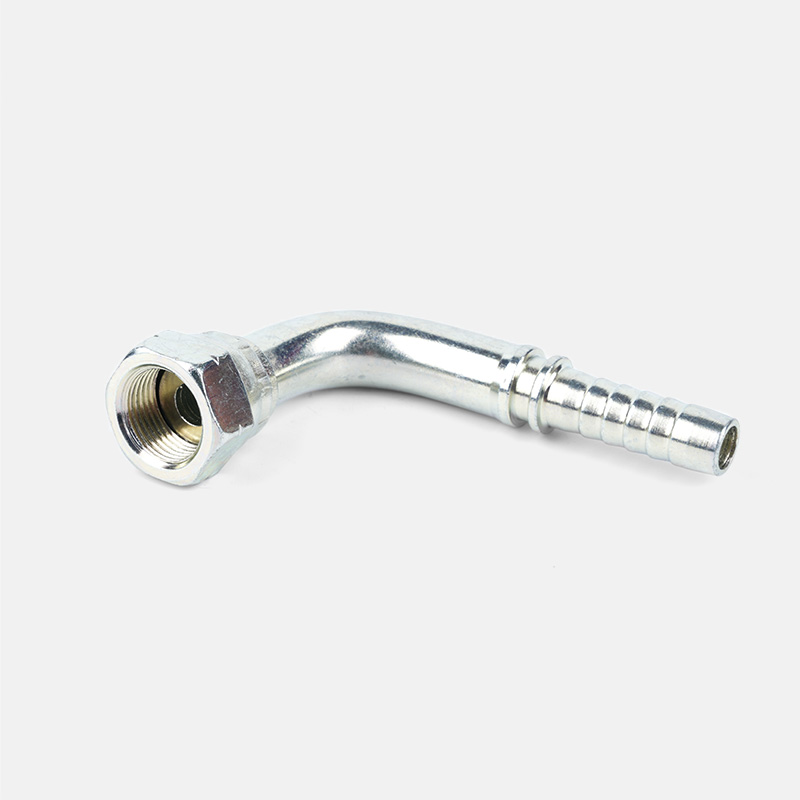
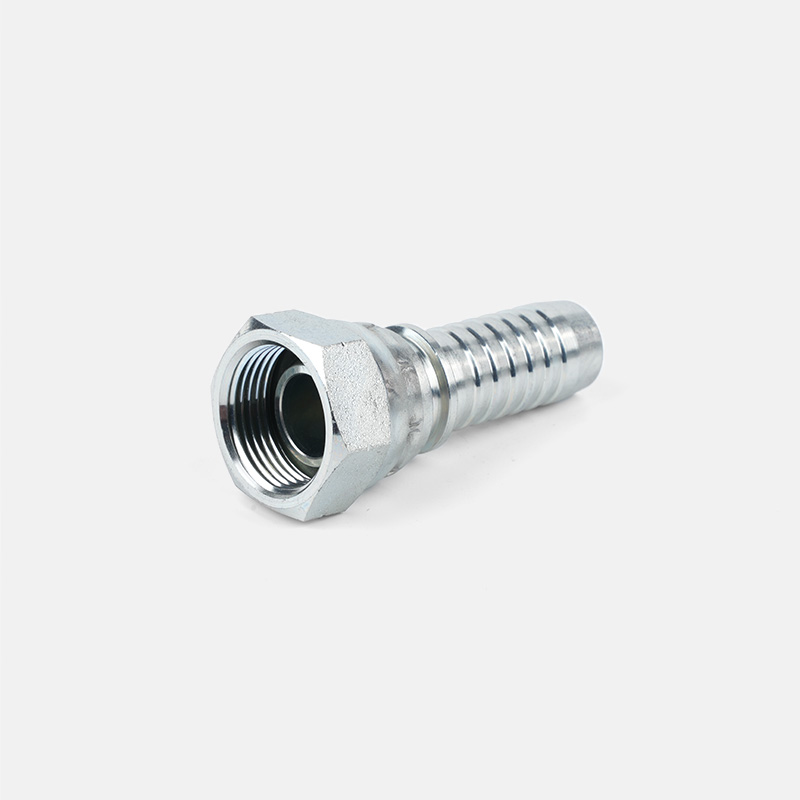
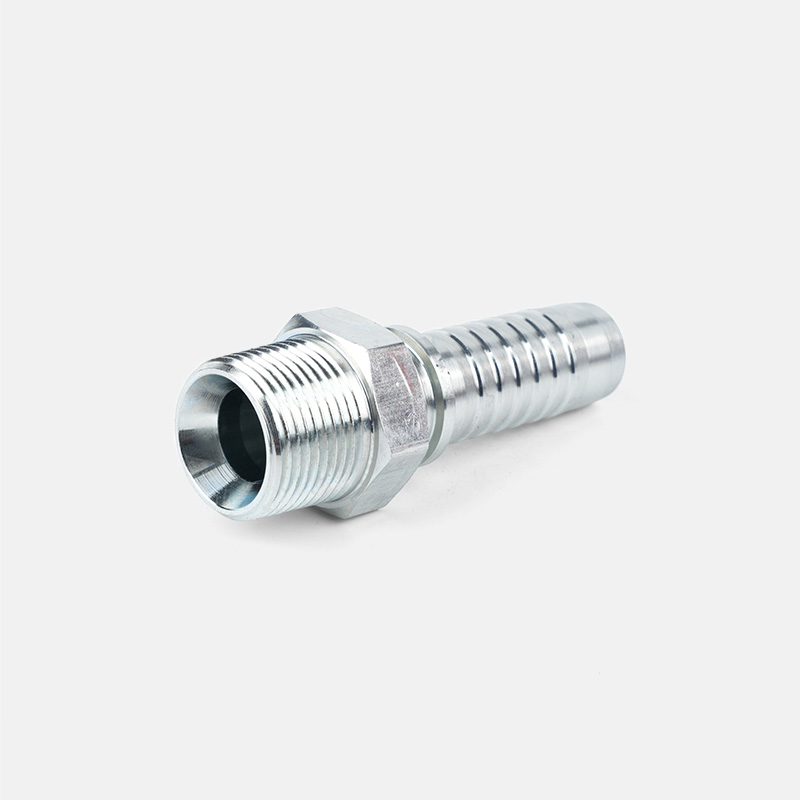
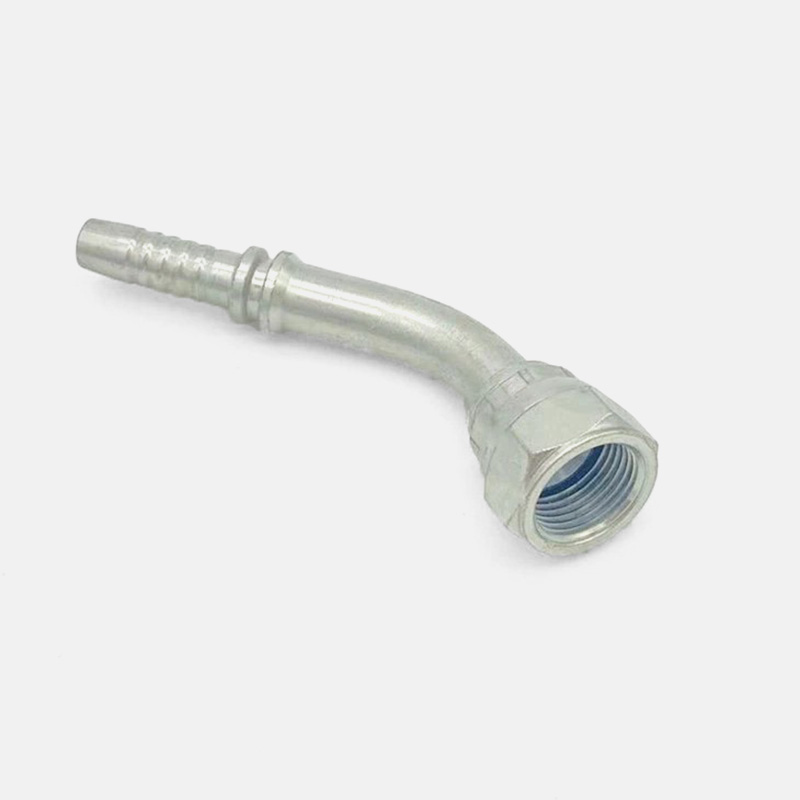
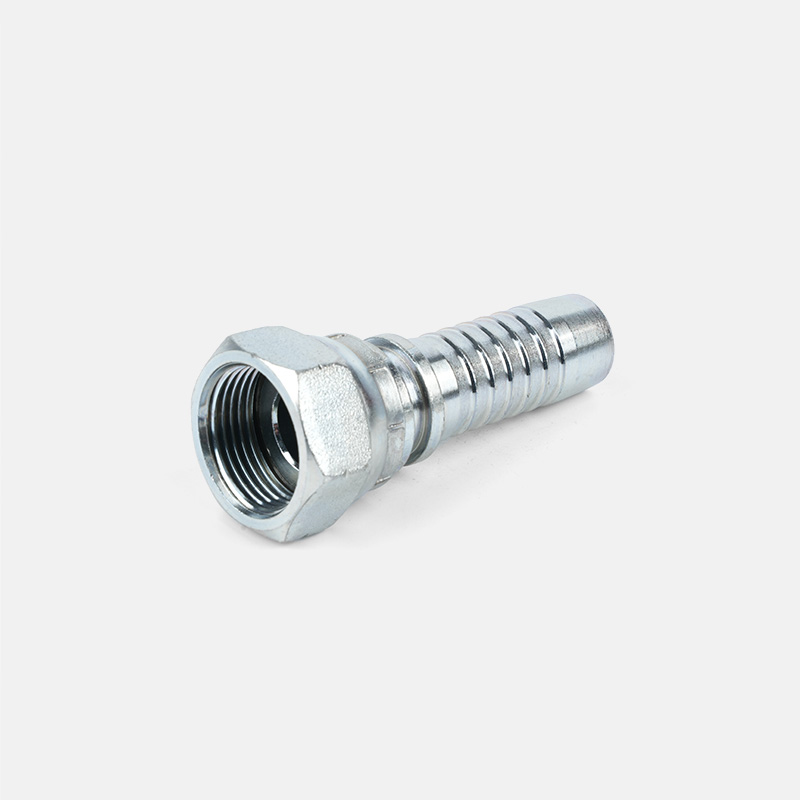
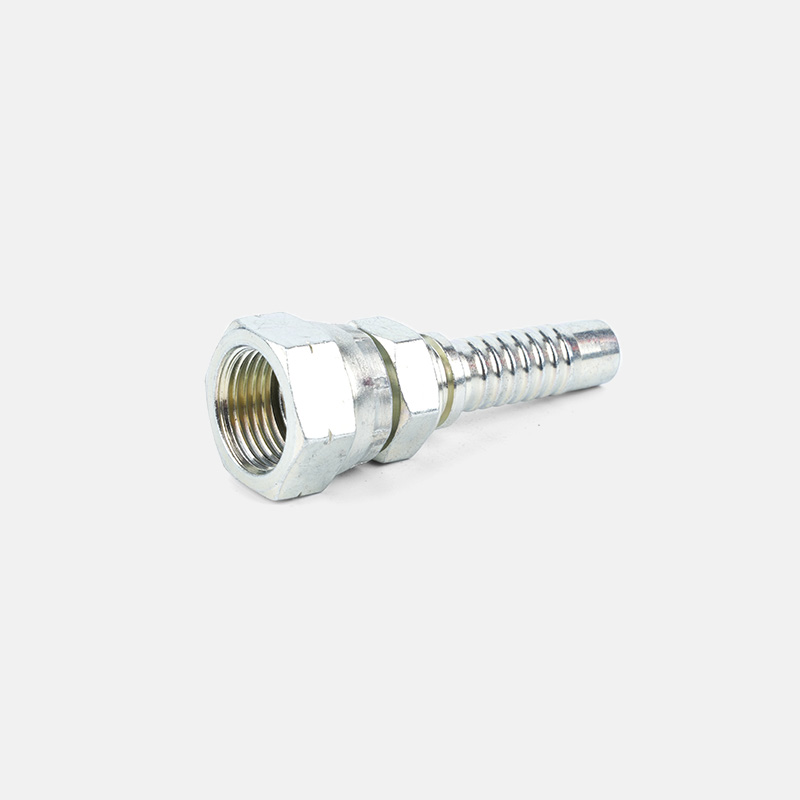
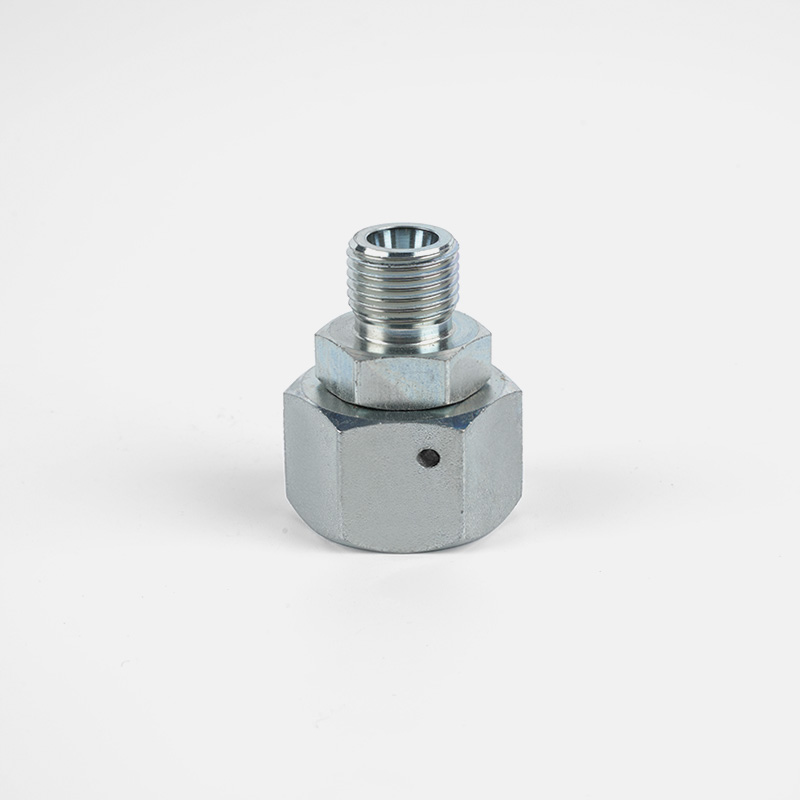
Once the dimensions are verified, the remaining decision is fitting style. A 3/8 BSPT can be supplied as a male hex plug, a female swivel hose fitting, a 90 degree elbow or a bulkhead adapter. The choice depends on whether the port is on a hose, a cylinder or a manifold block, and whether the assembly must rotate after tightening.
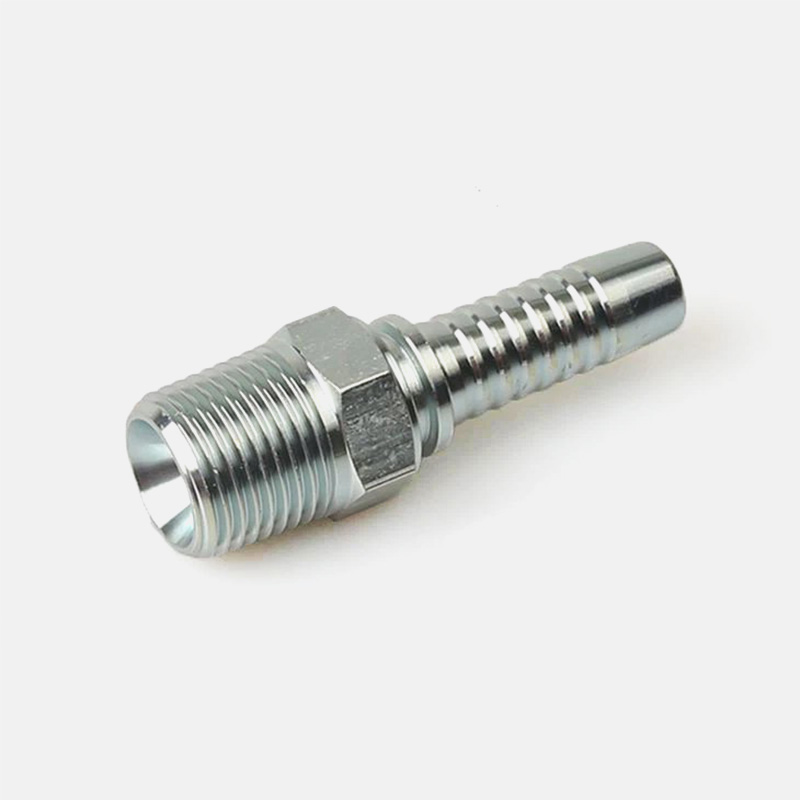 BSPT Hydraulic Fittings with 60° Cone for Hose and Port ConnectionsExplore BSPT hydraulic fittings in 3/8-19 size, offered as male hex plugs, female swivel hose fittings, elbows, or bulkhead adapters to suit different port types and assembly needs.View Product →
In the BSPT hydraulic fittings range, the 3/8-19 thread is one of the most requested sizes. Some buyers need a simple female 60 degree cone fitting for a hose assembly, while others need a male BSPT adapter that threads into a cylinder or valve port. The dimensions remain the same, but the connector style changes the routing and maintainability of the system.
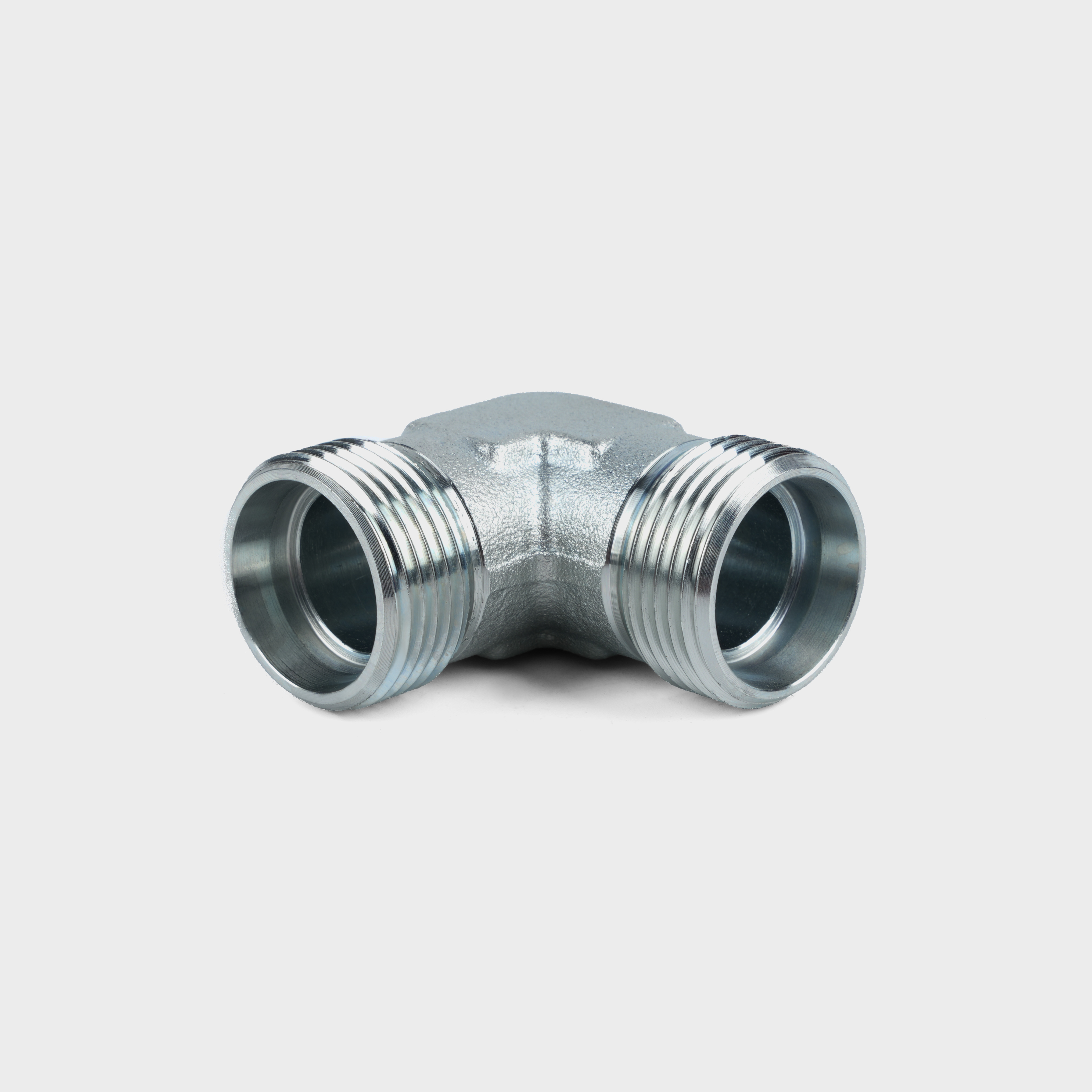
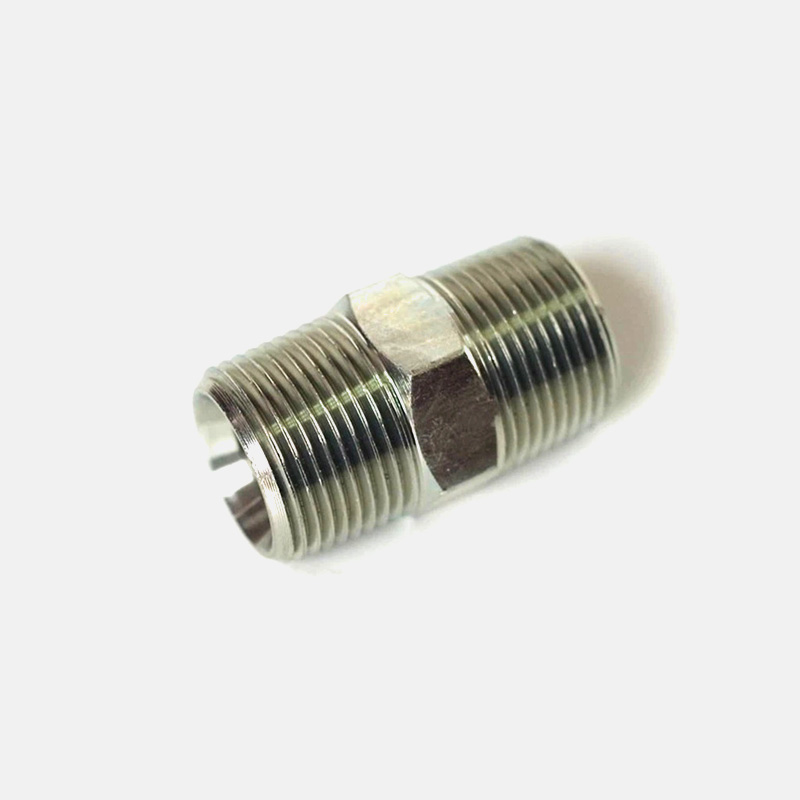 BSPT 90 Degree Elbow Adapter for Hose-to-Port TransitionsThis BSPT 90-degree elbow adapter joins a BSPT port to a BSP hose end, featuring a 1:16 taper and parallel seat for easy hose replacement without removing the adapter.View Product →
If the application requires joining a BSPT port to a BSP hydraulic hose end, a BSPT adapter from the 60 degree BSP series is the correct choice. It offers the same 1:16 taper on the threaded end and a standard parallel seat on the hose side, which lets you exchange hose ends without removing the port adapters.
Shifting from threading to installation brings the final practical point. Even a perfectly machined 3/8 BSPT thread will not hold pressure if the fitting is torqued the wrong way or misaligned. The thread should be started by hand and then tightened with a controlled wrench, not by pulling the hose strap. The taper needs to engage smoothly along the whole flank, so the fitting should be turned until it feels firm rather than forced to the last thread.
If you want to understand how to service these joints over the life of the machine, read our guide on hydraulic hose fitting installation and maintenance. The alignment of the coupling during installation also affects how evenly the taper halves engage. Our article on coupling alignment during installation covers the practical method for aligning a 3/8 BSPT female connector with a male port before applying torque.
How to Choose a Reliable 3/8 BSPT Supplier
When you buy 3/8 BSPT fittings in volume, production consistency matters more than the printed dimensions on the catalog page. A fitting that is 0.05 mm outside the pitch diameter tolerance can still meet sample checks but fail in a long production run. Experienced manufacturers control the thread form with hardened thread rolling dies or high quality taps, and they carry gauge blocks that match ISO 7-1.
Surface treatment is another factor. Zinc plating is common for BSPT fittings because it produces a hard, uniform layer and mild corrosion protection. Plating thickness can change the effective thread diameter, so a good supplier adjusts the before-plating dimensions to keep the final thread within tolerance. If plating is applied after threading without regard to the tolerance band, it can reduce the taper clearance and make the fitting harder to thread into a new port.
For a 3/8 BSPT fitting in a hydraulic system with dynamic pressure, carbon steel with a matching yield strength is the standard material. Stainless steel is used for corrosive environments, but the thread form is identical. A quick way to evaluate a supplier is to request the gauge report and compare the measured pitch diameter to the 15.806 mm nominal value. That single number validates the entire thread-cutting process.

Custom hydraulic accessories
From concept to production, we can create the products you want
Products
Contact Information
-

Tel: +86-159-6851-8588
-

E-mail: [email protected]
-

Add:Zhu Jia Station Village, Diankou Town, Zhuji City , Zhejiang Province, China
