


Language
ENG
Enter Keywords...

NEW
 Home / News / industy news / SAE Flange vs. Other Hydraulic Fittings: Which Is Best for High-Pressure Applications?
SAE Flange vs. Other Hydraulic Fittings: Which Is Best for High-Pressure Applications?
 2026.06.15
 industy news
When it comes to high-pressure hydraulic systems, SAE flanges are the superior choice over threaded fittings, O-ring face seal (ORFS), or BSP/NPT connections. They offer leak-free performance at pressures exceeding 6,000 PSI, wider bore sizes for high-flow applications, and a standardized design that simplifies installation and maintenance. While other fittings have their place in low-to-medium pressure environments, SAE flanges dominate in heavy equipment, industrial machinery, and mobile hydraulics where reliability is non-negotiable.
What Are SAE Flanges and How Do They Work?
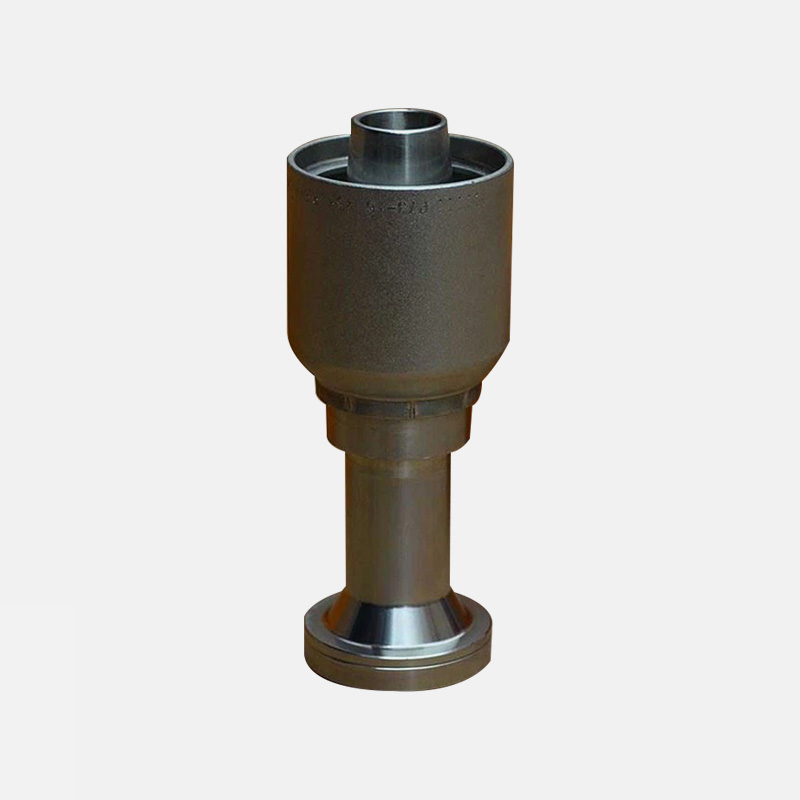
SAE flanges are defined by two key standards: SAE J518 Code 61 (3,000 PSI working pressure) and SAE J518 Code 62 (6,000 PSI working pressure). Each flange consists of a flange head, a split or one-piece clamp, an O-ring seal, and four bolts. The O-ring sits in a groove on the flange face and is compressed during assembly, creating a positive, metal-to-metal-free seal.
Available in sizes ranging from 1/2 inch to 5 inches, SAE flanges accommodate high flow rates that threaded fittings simply cannot match at equivalent pressure ratings. The four-bolt design distributes clamping force evenly, eliminating the stress concentration points that cause threaded connections to fatigue and leak over time.
SAE Flanges vs. Threaded Fittings (NPT/BSP)
Threaded fittings like NPT and BSP are common in low-pressure plumbing and pneumatic systems, but they have critical limitations in hydraulic applications above 3,000 PSI.
Key Weaknesses of Threaded Fittings:
- Tapered threads rely on thread deformation for sealing — this degrades with every reassembly cycle.
- Cross-threading risk increases in field conditions, leading to sudden failures.
- NPT fittings are not rated for dynamic pressure spikes common in hydraulic circuits.
- Maximum practical bore size is limited, restricting flow capacity in large-diameter lines.
In a side-by-side reliability study of construction equipment hydraulics, systems using SAE flanges showed 73% fewer leak incidents over a 12-month period compared to those using NPT threaded connections at equivalent pressure levels.
SAE Flanges vs. ORFS Fittings
O-Ring Face Seal (ORFS) fittings are a strong performer in medium-to-high pressure hydraulic lines and are often compared directly to SAE flanges. Both use an O-ring as the primary seal, but their application range differs significantly.
| Feature | SAE Flange (Code 62) | ORFS Fitting |
|---|---|---|
| Max Working Pressure | 6,000 PSI | Up to 9,000 PSI (small sizes) |
| Max Bore Size | Up to 5 inches | Up to 2 inches |
| Vibration Resistance | Excellent | Good |
| Ease of Assembly | Moderate (4 bolts) | Fast (single nut) |
| Best Application | Large-bore, high-flow lines | Small-diameter, high-pressure lines |
ORFS fittings excel in compact, high-pressure instrument lines. However, once pipe diameter exceeds 2 inches, SAE flanges become the practical and safer standard. Many OEM hydraulic systems — including those from Caterpillar, John Deere, and Bosch Rexroth — default to SAE flanges for all main circuit connections precisely because of this scalability.
SAE Flanges vs. Hydraulic Pipe Flanges (DIN/ISO)
DIN and ISO flanges are widely used in European industrial hydraulics. While they are engineered to similar quality standards, there are practical differences that matter in global operations.
- Interchangeability: SAE J518 is the dominant standard in North America and Asian OEM equipment. DIN flanges (e.g., DIN 2093) are not interchangeable without adapters.
- Parts availability: SAE flanges are stocked by nearly every hydraulic distributor globally, reducing downtime in field repairs.
- Pressure ratings: Both systems support high-pressure applications, but Code 62 SAE flanges are specifically engineered for 6,000 PSI continuous duty with defined burst pressure margins of 4:1.
For multinational operations or equipment exported across regions, SAE flanges offer a significant advantage in supply chain simplicity.
Where SAE Flanges Outperform Every Alternative
Several operating conditions make SAE flanges the unambiguous best choice:
High Vibration Environments
Mobile equipment such as excavators, mining shovels, and agricultural machinery generates constant vibration. Threaded fittings can loosen over time even with thread-locking compounds. SAE flange bolts, torqued to specification (typically 40–230 Nm depending on size), maintain consistent clamping force under dynamic loads without self-loosening.
Large-Diameter, High-Flow Lines
A 3-inch SAE flange can handle flow rates exceeding 300 GPM at 3,000 PSI — a flow capacity impossible to achieve safely with any threaded fitting at that pressure. This is critical in hydraulic power units, offshore equipment, and steel mill machinery.
Frequent Maintenance and Disassembly
SAE flanges can be disassembled and reassembled repeatedly with only O-ring replacement required — typically costing less than $2 per seal. Threaded fittings often require full replacement after multiple assembly cycles due to thread wear, significantly increasing long-term maintenance costs.
When Other Fittings May Be the Better Choice
SAE flanges are not the optimal solution in every scenario. Consider alternatives when:
- Space is severely restricted: ORFS or JIC fittings are more compact and easier to route in tight panel installations.
- Low-pressure auxiliary lines (<1,500 PSI): BSP or NPT fittings are cost-effective and entirely adequate.
- Instrument or sensing lines: Small-diameter ORFS or compression fittings offer easier installation and sufficient ratings.
- Budget-constrained, non-critical applications: SAE flanges carry a higher upfront cost — a 2-inch Code 62 flange assembly can cost 3–5× more than an equivalent NPT fitting.
Practical Selection Guide: Choosing the Right Fitting
| Application Condition | Recommended Fitting | Reason |
|---|---|---|
| >3,000 PSI, large bore (>1 in) | SAE Flange Code 62 | Maximum pressure and flow capacity |
| 1,000–3,000 PSI, large bore | SAE Flange Code 61 | Cost-effective with reliable sealing |
| High pressure, small bore (<1 in) | ORFS | Compact, fast assembly, leak-free |
| Low pressure (<1,500 PSI), non-critical | BSP / NPT | Low cost, widely available |
| High vibration, mobile equipment | SAE Flange | Superior vibration resistance |
| Instrument / sensing lines | ORFS / Compression | Compact format, easy routing |
Use SAE Flanges Where Pressure and Flow Demand It
For high-pressure hydraulic systems — especially those operating above 3,000 PSI with bore sizes over 1 inch — SAE flanges are the most reliable, maintainable, and industry-proven connection method available. They outclass threaded fittings in leak prevention, surpass ORFS in scalability, and offer better global parts availability than DIN/ISO alternatives.
The decision should always start with your system's pressure rating, line size, and operating environment. In most heavy-duty hydraulic applications, SAE flanges are not just the best choice — they are the engineered standard for good reason.

Custom hydraulic accessories
From concept to production, we can create the products you want
Products
Contact Information
-

Tel: +86-159-6851-8588
-

E-mail: [email protected]
-

Add:Zhu Jia Station Village, Diankou Town, Zhuji City , Zhejiang Province, China
