


Language
ENG
Enter Keywords...

NEW
 Home / News / industy news / What Materials Are Hydraulic Hose Connectors Made From and Which Is Best for Your Environment?
What Materials Are Hydraulic Hose Connectors Made From and Which Is Best for Your Environment?
 2026.06.08
 industy news
Hydraulic hose connectors are manufactured from five primary materials: carbon steel, stainless steel, brass, aluminum, and thermoplastic composites. For the vast majority of industrial and mobile hydraulic applications operating at pressures above 1,000 PSI, carbon steel with zinc or nickel plating is the standard choice — it offers the best combination of strength, pressure rating, and cost. Stainless steel is preferred for corrosive or high-temperature environments, brass for lower-pressure fluid systems and instrumentation, aluminum for weight-sensitive applications, and thermoplastic for specific chemical resistance requirements. The right material depends on five factors: operating pressure, fluid type, temperature range, environmental exposure, and regulatory requirements.
Why Material Selection Is a Safety-Critical Decision
A hydraulic hose connector is the weakest point in any hydraulic circuit — it is where dynamic pressure, mechanical stress, fluid chemistry, and environmental exposure all converge simultaneously. Selecting the wrong material for the operating environment does not simply cause accelerated wear: it can result in catastrophic connector failure, high-pressure fluid injection injuries, equipment damage, and fires when hydraulic fluid contacts hot surfaces.
- Hydraulic injection injuries are classified as medical emergencies — fluid injected through skin at pressures as low as 100 PSI can cause tissue necrosis requiring amputation within hours if untreated.
- Most industrial hydraulic systems operate between 1,500 and 5,000 PSI, with some high-performance systems exceeding 10,000 PSI — pressures that make connector material integrity non-negotiable.
- The U.S. Occupational Safety and Health Administration (OSHA) and ISO 4413 (Hydraulic Fluid Power — General Rules) both mandate that hydraulic components be rated and maintained for the maximum system pressure, including pressure spikes.
Material selection must account for not just nominal operating pressure but also pressure spikes — transient pressure surges that can reach 2–4× the system's rated working pressure and occur in milliseconds during valve closure or sudden load changes.
Carbon Steel: The Industrial Standard
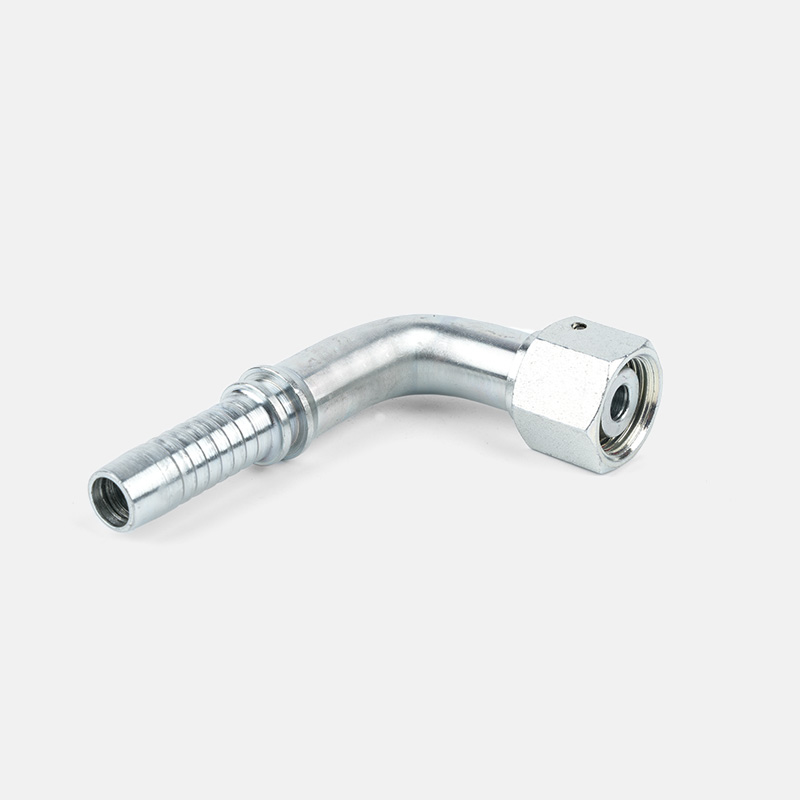
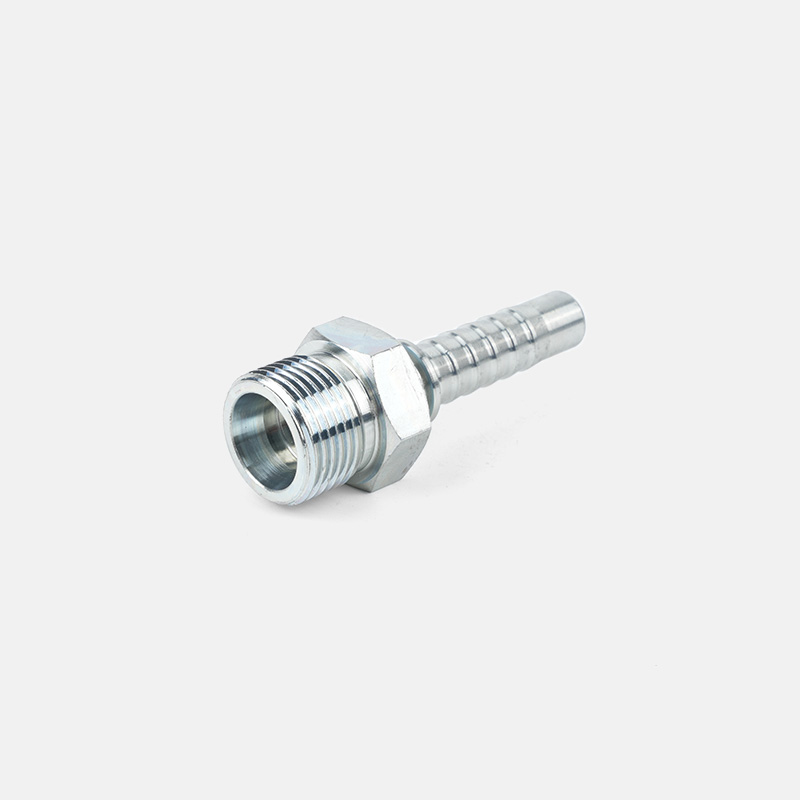
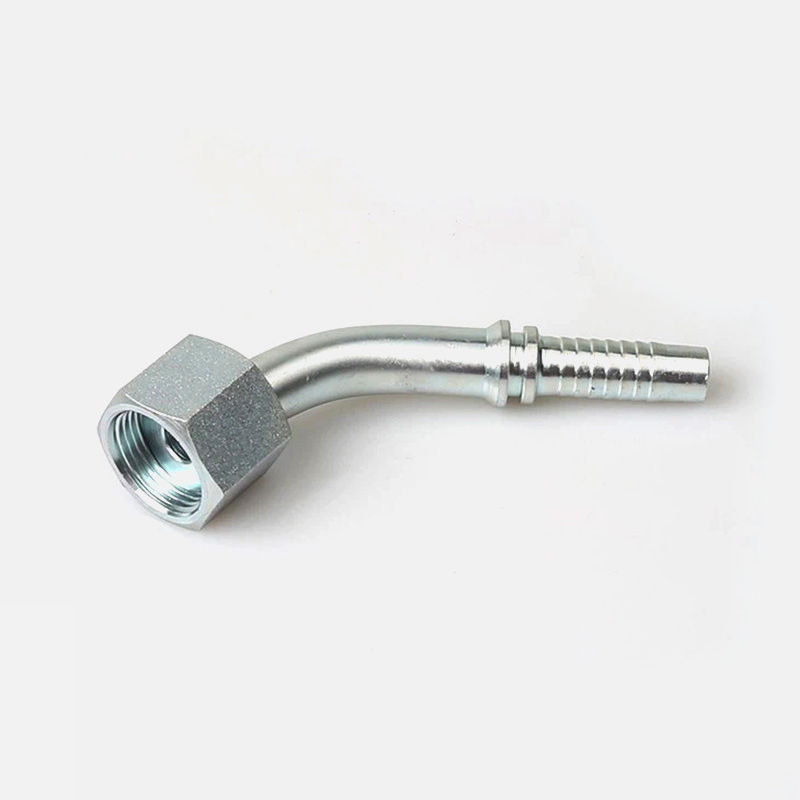
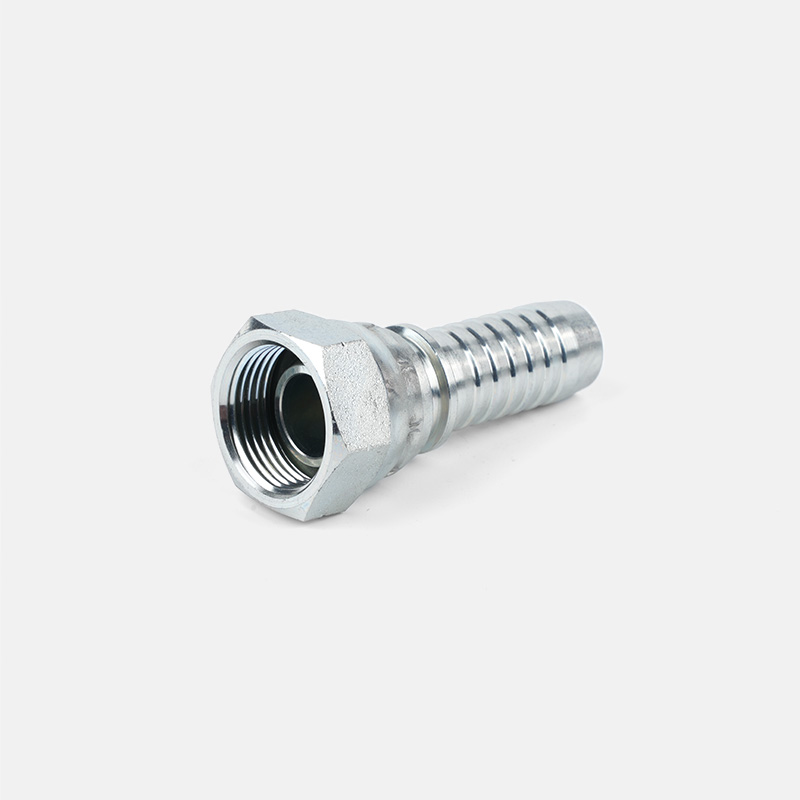
Carbon steel is the dominant material for hydraulic hose connectors in industrial, construction, agricultural, and mobile hydraulic applications. Its combination of high tensile strength, machinability, and cost-effectiveness makes it the default choice for systems operating above 1,000 PSI.
Mechanical Properties
- Tensile strength: 60,000–120,000 PSI depending on carbon content and heat treatment — significantly higher than brass or aluminum
- Working pressure range: Routinely rated to 5,000–10,000 PSI in standard hydraulic fitting grades; high-pressure instrumentation fittings rated to 15,000 PSI and above
- Temperature range: Suitable for continuous operation from -40°F to +400°F (-40°C to +204°C) in standard grades
- Machinability: Easily machined to tight tolerances required for leak-free sealing surfaces on JIC, ORFS, NPT, and BSP thread forms
Surface Treatments and Corrosion Protection
Raw carbon steel corrodes rapidly when exposed to moisture, making surface treatment essential for outdoor and humid environments. The three most common protective coatings are:
- Zinc plating (electroplating): The industry standard coating — provides 72–200 hours of salt spray resistance per ASTM B117 testing. Adequate for indoor and moderate outdoor use. Silver or yellow chromate passivation extends protection further.
- Nickel plating: Superior corrosion resistance compared to zinc — provides 200–500 hours of salt spray resistance. Preferred for offshore, marine-adjacent, or high-humidity environments where zinc plating degrades too quickly.
- Phosphate and oil (Parkerizing): A conversion coating that provides moderate corrosion protection and improved paint adhesion. Common in military and heavy equipment applications where connectors may be painted over.
Best Applications for Carbon Steel Connectors
- Construction equipment (excavators, bulldozers, cranes) operating at 3,000–5,000 PSI
- Agricultural machinery (combines, tractors, sprayers)
- Industrial hydraulic presses and manufacturing equipment
- Mobile hydraulic systems with mineral oil or synthetic hydraulic fluid
- Not recommended for: Seawater exposure, food processing, oxygen service, or highly acidic/alkaline chemical environments
Stainless Steel: Superior Corrosion and Temperature Resistance
Stainless steel hydraulic connectors are manufactured from two primary alloy grades — 304 and 316 stainless steel — and represent the premium choice for environments where carbon steel's corrosion protection is insufficient. The higher material and machining cost (typically 3–5× the price of carbon steel equivalents) is justified in specific demanding environments.
304 vs. 316 Stainless Steel: Key Differences
| Property | 304 Stainless Steel | 316 Stainless Steel |
|---|---|---|
| Composition | 18% chromium, 8% nickel | 16% chromium, 10% nickel, 2% molybdenum |
| Chloride resistance | Moderate — susceptible to pitting in saltwater | High — molybdenum resists chloride pitting |
| Salt spray resistance | 500–1,000 hours | 1,000–2,000+ hours |
| Temperature range | -320°F to +870°F (-196°C to +465°C) | -320°F to +870°F (-196°C to +465°C) |
| Tensile strength | 73,000–84,000 PSI | 70,000–84,000 PSI |
| Relative cost vs. carbon steel | 3–4× | 4–5× |
| FDA / food contact approval | Generally accepted | Preferred standard |
Best Applications for Stainless Steel Connectors
- Marine and offshore: Deck equipment, anchor handling systems, subsea hydraulic controls — 316 stainless is mandatory for direct seawater exposure
- Food and beverage processing: Hydraulic systems on filling machines, presses, and conveyors where fluid contact with food products is possible — 316 stainless with electropolished finish is the regulatory standard
- Pharmaceutical manufacturing: Clean room hydraulic systems requiring full traceability and material certification (mill certs)
- Chemical processing: Systems handling acids, alkalis, or solvents that would attack carbon steel or brass within days
- High-temperature applications: Hydraulic systems on foundry equipment, autoclaves, or steelmaking machinery operating above 300°F (149°C)
Brass: The Low-Pressure and Fluid-Compatibility Specialist
Brass hydraulic connectors — typically manufactured from C36000 free-machining brass (61.5% copper, 35.5% zinc, 3% lead) — are the preferred material for low-to-medium pressure hydraulic and pneumatic systems, particularly where compatibility with water, air, or specific fluids is required. Their natural corrosion resistance, excellent machinability, and non-sparking properties make them valuable in specific applications where carbon steel is unsuitable.
Mechanical Properties and Limitations
- Tensile strength: 47,000–68,000 PSI — significantly lower than carbon or stainless steel
- Working pressure range: Typically limited to 800–3,000 PSI in standard hydraulic fitting configurations — unsuitable for high-pressure industrial hydraulics
- Temperature range: -65°F to +400°F (-54°C to +204°C) — adequate for most fluid power applications
- Dezincification risk: Standard brass is susceptible to dezincification — a corrosion process where zinc leaches from the alloy in hot or aggressive water, leaving a porous copper structure. In potable water or high-temperature water systems, specify dezincification-resistant (DR) brass or CW602N grade.
Best Applications for Brass Connectors
- Pneumatic systems: Compressed air lines, pneumatic tools, and control systems — brass is the dominant material for air fittings globally
- Water hydraulics: Low-pressure water-based systems, cooling circuits, and water treatment equipment
- Instrumentation and gauge connections: Pressure gauge ports, transducer connections, and sampling points where low leak rates and corrosion resistance are prioritized over high pressure ratings
- Explosive or flammable environments: Brass is non-sparking — essential where static discharge or impact sparks could ignite flammable atmospheres (ATEX-rated zones)
- Natural gas and LPG systems: Brass is compatible with most fuel gases and is widely used in gas line fittings
- Not recommended for: High-pressure hydraulic systems above 3,000 PSI, acetylene service (brass reacts with acetylene to form explosive copper acetylide), or ammonia-containing fluids
Aluminum: Lightweight Performance for Weight-Sensitive Applications
Aluminum hydraulic hose connectors — typically manufactured from 6061-T6 or 7075-T6 aluminum alloy — offer a unique combination of moderate strength, excellent corrosion resistance, and dramatically reduced weight. At approximately one-third the weight of steel, aluminum connectors are valuable in applications where every kilogram of system weight has performance or cost implications.
Mechanical Properties
- 6061-T6 tensile strength: 45,000 PSI — suitable for moderate-pressure systems up to approximately 3,000 PSI
- 7075-T6 tensile strength: 83,000 PSI — approaches steel-level strength, suitable for higher-pressure aerospace applications up to 5,000 PSI
- Density: 2.7 g/cm³ vs. 7.8 g/cm³ for steel — aluminum connectors weigh approximately 65% less than equivalent steel parts
- Temperature range: -320°F to +300°F (-196°C to +149°C) — limited upper temperature compared to steel; not suitable for high-temperature hydraulic systems
- Galvanic corrosion risk: Aluminum corrodes rapidly when in direct electrical contact with steel, copper, or brass in the presence of an electrolyte (moisture). Always use dielectric fittings or isolating washers when mixing aluminum connectors with dissimilar metals.
Best Applications for Aluminum Connectors
- Aerospace hydraulics: Aircraft flight control systems, landing gear, and actuators where weight reduction directly affects fuel efficiency and payload capacity
- Motorsport: Racing hydraulic systems (brake, clutch, power steering) where every gram of weight matters
- Military vehicles and portable equipment: Man-portable hydraulic rescue tools, lightweight field equipment
- Refrigeration and cryogenic systems: Aluminum performs well at extremely low temperatures where carbon steel becomes brittle
- Not recommended for: Continuous high-temperature service above 300°F, systems with strong alkalis (pH above 11) which dissolve aluminum oxide passivation layer, or high-cycle fatigue applications
Thermoplastic and Composite Materials: Chemical Resistance Specialists
Thermoplastic hydraulic connectors — manufactured from materials including nylon (PA66), polypropylene (PP), PVDF (Kynar), and PEEK — address a specific requirement that no metal material can fully meet: compatibility with highly aggressive chemicals that attack all metal alloys. They are not general-purpose replacements for metal connectors and carry significant pressure and temperature limitations.
- Nylon (PA66): Working pressure up to 150–250 PSI; resistant to mineral oils, fuels, and weak acids; commonly used in low-pressure hydraulic return lines and pneumatic systems
- Polypropylene (PP): Working pressure up to 150 PSI; excellent resistance to acids, bases, and most solvents; used in chemical dosing systems and water treatment
- PVDF (Kynar): Working pressure up to 230 PSI; outstanding resistance to chlorine, bromine, and strong oxidizers; used in semiconductor manufacturing and water disinfection systems
- PEEK (Polyether ether ketone): Working pressure up to 10,000+ PSI in machined forms; exceptional chemical and temperature resistance up to 480°F (250°C); used in downhole oil and gas tools and aerospace applications where both chemical resistance and high pressure are required — at a price premium of 10–20× equivalent metal fittings
Material Selection by Environment: A Practical Decision Guide
| Operating Environment | Recommended Material | Avoid | Key Reason |
|---|---|---|---|
| General industrial (indoor, mineral oil) | Carbon steel (zinc plated) | Thermoplastic | Best strength-to-cost ratio for standard hydraulic pressures |
| Outdoor / construction equipment | Carbon steel (nickel plated) | Aluminum, brass | Enhanced corrosion protection for weather exposure; strength for high-pressure systems |
| Marine / offshore / coastal | 316 stainless steel | Carbon steel, brass, aluminum | Chloride-induced pitting destroys all other metals rapidly in seawater |
| Food / beverage / pharmaceutical | 316L stainless steel | Carbon steel, brass (lead content) | Regulatory compliance; no contamination risk; cleanability |
| Chemical processing (acids/alkalis) | 316 SS or PVDF (by fluid) | Carbon steel, brass | Chemical compatibility must be verified against specific fluid — no universal metal solution |
| Aerospace / motorsport | Aluminum 7075-T6 or titanium | Carbon steel (weight) | Weight reduction is primary driver; cost secondary |
| Explosive / flammable atmosphere (ATEX) | Brass or bronze | Carbon steel (sparking risk) | Non-sparking property prevents ignition of flammable atmospheres |
| Cryogenic (below -100°F / -73°C) | 304/316 stainless or aluminum | Carbon steel (brittle fracture risk) | Carbon steel undergoes ductile-to-brittle transition at low temperatures |
| High temperature (above 400°F / 204°C) | Stainless steel or PEEK | Aluminum, thermoplastics (except PEEK) | Aluminum loses strength above 300°F; most plastics melt or degrade |
Fluid Compatibility: Matching Connector Material to Hydraulic Fluid Type
The hydraulic fluid itself is one of the most overlooked factors in connector material selection. Incompatible fluid-metal combinations cause accelerated corrosion, seal degradation, and fluid contamination — often without visible warning signs until a connector fails.
- Mineral oil (ISO 46, 68): Compatible with carbon steel, stainless steel, brass, and aluminum. The most forgiving fluid type for material selection.
- Water-glycol fire-resistant fluid (HFC): Requires stainless steel or nickel-plated carbon steel — water-glycol attacks standard zinc plating and causes zinc to leach into the fluid, which then damages pump internals. Brass and aluminum are also attacked by some water-glycol formulations.
- Phosphate ester fire-resistant fluid (Skydrol, HFD-R): Requires stainless steel or aluminum — phosphate esters attack zinc plating, carbon steel, and most seal materials within weeks. Skydrol is widely used in aircraft hydraulics specifically because aluminum and stainless steel systems are standard in that industry.
- Biodegradable vegetable-based fluid (HETG): Generally compatible with carbon steel but may promote microbial growth in low-flow zones — specify connectors with smooth internal bore finishes to minimize biofilm accumulation sites.
- Synthetic ester fluid (HEES): Compatible with carbon steel, stainless steel, and aluminum. Avoid brass in high-temperature HEES applications as some ester formulations cause accelerated brass corrosion above 150°F (65°C).
Key Specifications to Verify Before Purchasing Any Hydraulic Hose Connector
Regardless of material, always confirm these specifications against your system requirements before specifying or purchasing hydraulic hose connectors:
- Maximum working pressure (MWP): The connector's MWP must exceed your system's maximum operating pressure including pressure spikes — specify connectors with an MWP of at least 1.25× your system's relief valve setting.
- Burst pressure rating: Quality hydraulic connectors carry a minimum 4:1 safety factor — a connector rated for 5,000 PSI working pressure should have a burst rating of at least 20,000 PSI.
- Material certification (mill cert): For critical applications — offshore, aerospace, pharmaceutical — always request material test reports confirming alloy composition and mechanical properties to the specified grade.
- Surface treatment specification: For carbon steel connectors, confirm the plating type, minimum thickness (typically 5–8 microns for zinc plating), and salt spray test hours per ASTM B117.
- Thread form and seal type: Confirm compatibility between connector thread (JIC, ORFS, NPT, BSP, SAE, Metric) and mating port — mixing thread standards is one of the most common causes of hydraulic leaks and connector cross-threading damage.
- Standards compliance: Verify conformance to relevant standards — SAE J516 (hydraulic hose fittings), ISO 8434 (metallic tube end fittings), or DIN 2353 for European applications — particularly for OEM and export equipment.

Custom hydraulic accessories
From concept to production, we can create the products you want
Products
Contact Information
-

Tel: +86-159-6851-8588
-

E-mail: [email protected]
-

Add:Zhu Jia Station Village, Diankou Town, Zhuji City , Zhejiang Province, China
