


Language
ENG
Enter Keywords...

NEW
 Home / News / industy news / How Do You Properly Install Hydraulic Hose Connectors to Prevent Leaks?
How Do You Properly Install Hydraulic Hose Connectors to Prevent Leaks?
 2026.06.01
 industy news
To properly install hydraulic hose connectors and prevent leaks, you must follow a disciplined process: clean all components, verify compatibility, apply correct torque, and pressure-test before returning the system to service. The majority of hydraulic leaks are not caused by defective parts — they result from improper installation. Studies in the fluid power industry consistently show that over 80% of hose assembly failures stem from human error during assembly and installation. This guide gives you a step-by-step process to get it right the first time.
Gather the Right Tools Before You Start
Improvising with the wrong tools is one of the fastest ways to damage threads, crush ferrules, or under-torque fittings. Before touching any connector, confirm you have the following on hand:
- Calibrated torque wrench: Essential for applying manufacturer-specified torque values. A standard wrench provides no torque feedback and leads to under- or over-tightening — both cause leaks.
- Two open-end wrenches (correct size): One holds the fitting body stationary while the other turns the nut. Using a single wrench twists the hose body and damages the internal seal or braid.
- Thread pitch gauge and calipers: To verify thread type and diameter before assembly — especially critical when mixing components from different manufacturers or regions.
- Clean lint-free cloths and solvent: For cleaning port faces, threads, and connector ends before assembly.
- Hydraulic system-compatible thread sealant or O-rings: Depending on the fitting type — never use PTFE tape on O-ring face seal (ORFS) or JIC fittings.
- Marker or paint pen: Used to mark reference lines for FFWR (Flats From Wrench-Tight) torque verification.
Inspect and Clean All Components Before Assembly
Contamination is the enemy of a leak-free connection. Even microscopic debris on a sealing face or thread can create a leak path once pressurized. Before assembly, perform a thorough inspection of every component:
What to Check on Each Component
- Threads: Look for cross-threading, burrs, or corrosion. Run a thread chaser or wire brush through damaged threads before attempting assembly. Never force a fitting that feels tight during hand-threading.
- O-rings and seals: Inspect for nicks, flat spots, or hardening. A compromised O-ring will not seal regardless of torque applied. Replace any seal that shows surface cracking or deformation.
- Sealing faces (ORFS fittings): The flat sealing face must be free of radial scratches. Even a single scratch across the O-ring groove path can cause weeping at pressure.
- Flare seats (JIC fittings): Inspect the 37° cone surface for pitting or raised metal from previous over-torquing. A damaged seat cannot form a metal-to-metal seal.
Clean all surfaces with a lint-free cloth dampened with clean hydraulic fluid or an approved solvent. Never blow ports with shop air — unfiltered compressed air introduces moisture and debris directly into the hydraulic circuit.
Lubricate the Correct Parts — and Only Those Parts
Lubrication reduces galling during tightening and helps O-rings seat evenly under compression. However, lubricating the wrong surfaces can compromise the seal or attract contamination. Follow these rules precisely:
| Fitting Type | Lubricate? | What to Lubricate | What NOT to Lubricate |
|---|---|---|---|
| ORFS (O-Ring Face Seal) | Yes | O-ring only (light coat of clean hydraulic fluid) | Sealing face, threads |
| JIC (37° Flare) | Minimal | Light oil on threads only | 37° flare seat (metal-to-metal seal — must be dry) |
| NPT (Tapered Thread) | Yes | Thread sealant (anaerobic or PTFE paste) on male threads | First 1–2 threads (prevents sealant entering the system) |
| BSPP (Parallel Thread) | Yes | O-ring or bonded seal face | Thread flanks (seal is at face, not threads) |
For NPT fittings, never use PTFE tape in hydraulic systems. Tape fragments can shred during assembly and migrate into valves, orifices, and pumps. Use an anaerobic thread sealant rated for hydraulic pressure instead.
Hand-Tighten First, Then Apply Correct Torque
Every connector installation follows the same sequence: hand-tighten to finger-tight, verify alignment, then apply final torque. Skipping the hand-tightening step is a common cause of cross-threading — which destroys both the fitting and the port.
Torque Specifications by Fitting Size
| Dash Size | Thread Size | JIC Torque (ft-lb) | ORFS Torque (ft-lb) |
|---|---|---|---|
| -4 | 7/16"-20 | 9–11 | 8–10 |
| -6 | 9/16"-18 | 17–19 | 16–20 |
| -8 | 3/4"-16 | 30–35 | 29–33 |
| -12 | 1-1/16"-12 | 65–75 | 63–70 |
| -16 | 1-5/16"-12 | 100–115 | 95–110 |
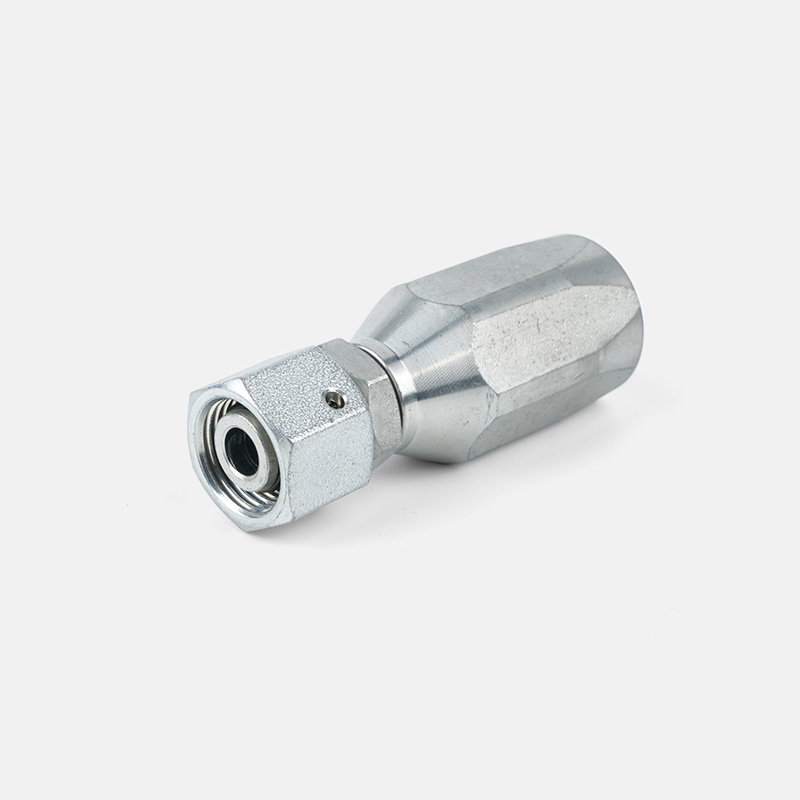
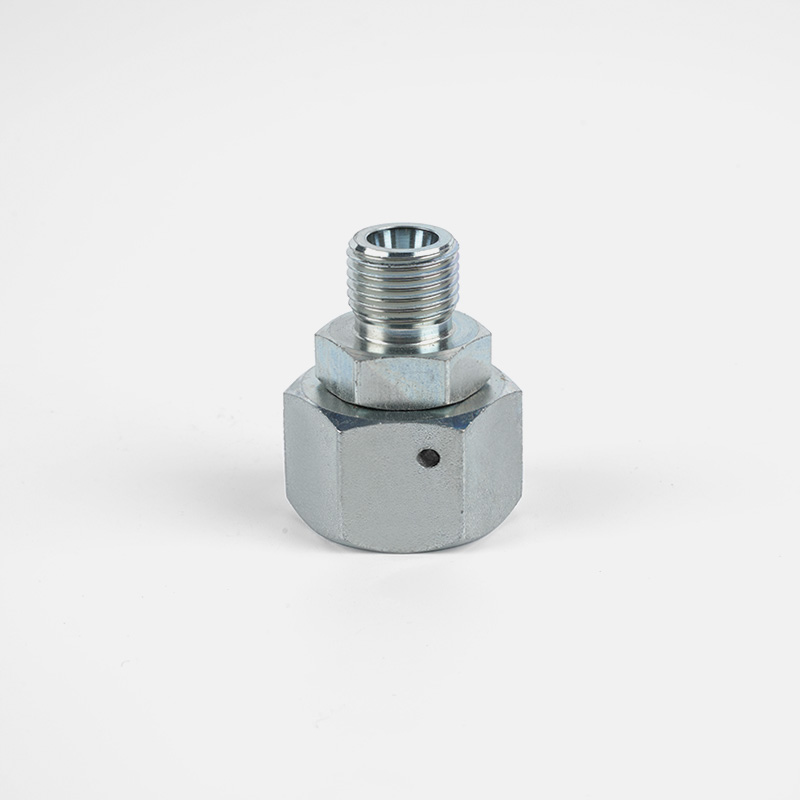
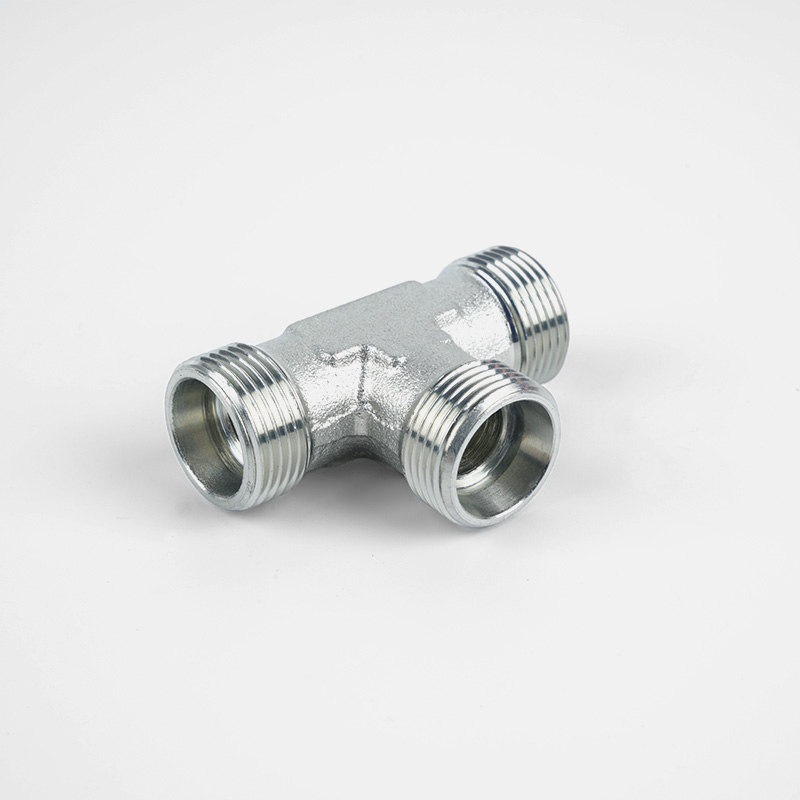
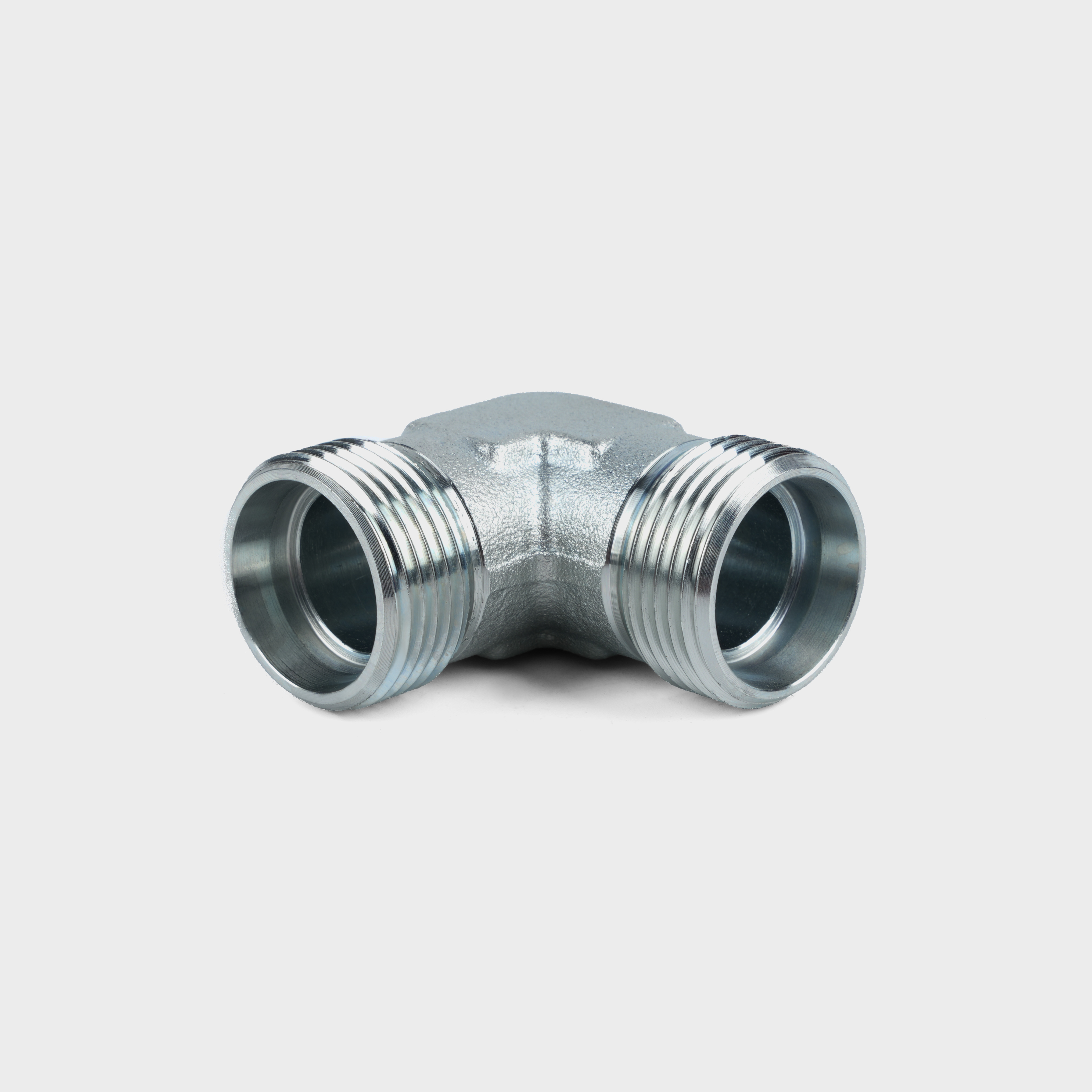
For adjustable fittings (such as elbow or tee connectors that need to be oriented), use the FFWR method: tighten to finger-tight, back off 1 full turn, orient the fitting to the correct position, then tighten to the specified torque value. Never over-rotate to reach the desired orientation — this overstresses the O-ring or flare seat.
Route and Support the Hose Assembly Correctly
Even a perfectly installed connector will leak prematurely if the hose is poorly routed. Hose routing determines long-term connector integrity by controlling vibration, flex fatigue, and mechanical stress at the fitting joint.
- Avoid twisting the hose during installation. A twist of just 5–7° can reduce hose service life by up to 70%. After routing, check that the lay line (the stripe printed along the hose) runs straight without spiraling.
- Maintain minimum bend radius. For a -8 (1/2" ID) hose, the minimum bend radius is typically 3.5 inches. Routing tighter than this fatigues the wire braid internally, even if the hose looks fine externally.
- Leave slack for movement. Hoses connecting moving components (cylinders, pivoting booms) must have sufficient length to flex through the full range of motion without pulling on the fittings. A hose under tension transmits force directly to the connector threads.
- Clamp at regular intervals. Support long hose runs every 24 inches (610 mm) for hoses up to -12 size. Unsupported hoses vibrate against structures, wearing through the outer cover and eventually fatiguing the fitting crimp zone.
- Keep hoses away from heat sources. Sustained temperatures above 212°F (100°C) degrade rubber compounds and cause O-ring hardening. Use heat sleeves or reroute away from exhaust manifolds and turbochargers.
Pressure-Test the Assembly Before Full Operation
Never return a hydraulic system to full operation immediately after replacing or installing connectors. A controlled pressure test catches installation errors before they become safety hazards or cause collateral damage to pumps and valves.
Step-by-Step Pressure Test Procedure
- Bleed air from the system by cycling the actuators slowly at low pressure (under 200 PSI) several times. Air pockets cause erratic pressure spikes that can blow newly installed fittings.
- Bring system to 50% of working pressure and hold for 5 minutes. Inspect all new connections visually for seepage.
- Increase to 100% working pressure and hold for 10 minutes. Use UV dye in the fluid or a white paper towel pressed around each fitting to detect micro-leaks invisible to the naked eye.
- Cycle to 125% of working pressure for 2 minutes if the application involves pressure spikes (e.g., cylinder end-of-stroke impacts). This simulates real-world peak loads.
- Re-torque if needed — after initial pressurization, some O-ring fittings seat further. If minor seepage is found, depressurize fully before attempting any adjustment.
Never tighten a fitting while the system is under pressure. Hydraulic fluid injection injuries — where fluid penetrates skin at high velocity — are severe medical emergencies and have resulted in amputations. Always depressurize fully before any adjustment.
Common Installation Mistakes That Cause Leaks
Even experienced technicians make repeatable errors. Knowing the most common mistakes helps you build a mental checklist for every installation:
| Mistake | Why It Causes Leaks | Prevention |
|---|---|---|
| Over-torquing JIC fittings | Deforms the 37° flare seat, preventing metal-to-metal seal | Use a calibrated torque wrench; follow dash-size specs |
| Reusing O-rings | Compressed O-rings take a set and won't seal correctly when re-compressed | Always install new O-rings on every reassembly |
| Using PTFE tape on ORFS or JIC | Tape interferes with O-ring compression and metal seating; fragments contaminate fluid | Use PTFE tape only on NPT tapered threads, and only anaerobic paste for hydraulics |
| Twisting the hose during tightening | Rotational stress is transferred to the crimp zone, loosening the connector over time | Always use two wrenches — one on the fitting body, one on the nut |
| Ignoring port condition | A damaged or dirty port face prevents the connector from seating flush | Clean and inspect port faces before every installation |
Establish a Post-Installation Inspection Schedule
A successful installation is not the end of the process — it is the beginning of a monitoring cycle. New connector installations should follow a 3-stage inspection schedule to catch early-life issues before they escalate:
- First 8 operating hours: Visually inspect all new connections for any signs of seepage or fluid film. This is when most installation errors manifest under real operating pressure and temperature cycles.
- First 50 operating hours: Check hose routing integrity — confirm no unexpected rubbing, kinking, or tension has developed as adjacent components settled into operation.
- Every 500 hours or per OEM schedule: Full hose and connector inspection, including checking for outer cover abrasion, fitting corrosion, and any weeping at the crimp ferrule. Replace any hose showing outer cover damage — internal braid corrosion progresses rapidly once moisture reaches the wire reinforcement.
Documenting installation dates, torque values applied, and O-ring part numbers used creates a maintenance record that simplifies troubleshooting if a leak develops later. A 10-minute documentation habit can save hours of diagnostic work down the line.

Custom hydraulic accessories
From concept to production, we can create the products you want
Products
Contact Information
-

Tel: +86-159-6851-8588
-

E-mail: [email protected]
-

Add:Zhu Jia Station Village, Diankou Town, Zhuji City , Zhejiang Province, China
