


Language
ENG
Enter Keywords...

NEW
 Home / News / industy news / How to Determine Proper Hydraulic Hose Fittings: A Complete Practical Guide
How to Determine Proper Hydraulic Hose Fittings: A Complete Practical Guide
 2026.06.17
 industy news
The correct answer to selecting proper hydraulic hose fittings comes down to five key factors: fitting type (permanent or reusable), port connection style, sealing method, fitting geometry, and thread size. Getting any one of these wrong can result in dangerous leaks, pressure failure, or system downtime — making accurate identification not just a technical exercise, but a critical safety practice.
Whether you are working with 1/2'' hydraulic hose fittings on a log splitter, maintaining hydraulic lines and fittings on heavy construction equipment, or sourcing hydraulic fittings and hoses for a custom power unit, this guide walks you through everything you need to know — with real specifications, charts, and examples.
What Are Hydraulic Hose Fittings and Why Do They Matter?
Hydraulic hose fittings are the mechanical connectors used to join hydraulic hoses to pumps, cylinders, valves, and other components within a hydraulic system. They form the critical junction between flexible hose and rigid ported equipment, ensuring that pressurized hydraulic fluid travels safely from source to actuator without leakage.
Modern hydraulic systems operate under enormous pressure — commonly between 1,500 PSI and 5,000 PSI, with some specialty applications exceeding 10,000 PSI. At these pressures, even a minor mismatch in fitting type, thread pitch, or sealing design can lead to catastrophic failure. A blown fitting on a hydraulic pump hose, for instance, can spray hot oil at high velocity, creating both a fire hazard and a severe safety risk.
Understanding the full spectrum of hydraulic connector types and types of hydraulic fittings is therefore not optional for engineers, mechanics, or equipment operators — it is foundational knowledge.
Types of Hydraulic Hoses: Matching the Hose to the Fitting
Before selecting a fitting, it is essential to understand the types of hydraulic hoses available, because the hose construction directly determines which fittings can be crimped or attached to it.
Wire-Braided Hose (SAE 100R1, R2)
This is the most common category for mid-pressure applications. SAE 100R1 hose features a single wire braid and is rated up to approximately 2,250 PSI for a 1/2'' inner diameter. The SAE 100R2 uses a double wire braid and can handle up to 3,500 PSI in the same size. These types of hydraulic hoses are widely used with standard hydraulic pump hoses and mobile equipment.
Spiral-Wound Hose (SAE 100R9, R12, R13, R15)
Spiral-wound hoses are used in extreme-pressure environments. The SAE 100R15 can handle working pressures up to 6,000 PSI across sizes from 3/8'' to 2''. These hoses require heavy-duty fittings and crimping equipment specifically matched to their construction.
Thermoplastic Hose (SAE 100R7, R8)
Thermoplastic hoses are lighter, more flexible, and resistant to oils and many chemicals. They are particularly suited to hydraulic lines and fittings in mobile agricultural or forestry equipment where weight and flexibility matter. They use their own dedicated fitting styles that should not be interchanged with rubber hose fittings.
PTFE-Lined Hose
PTFE (polytetrafluoroethylene) lined hoses offer chemical resistance and are used in specialized hydraulic fittings and hoses assemblies where fluid compatibility is a concern. They require precision swaged or crimped end fittings.
| Hose Type | SAE Standard | Max Pressure (1/2" ID) | Typical Application |
|---|---|---|---|
| Single Wire Braid | 100R1 | 2,250 PSI | General industrial, agricultural |
| Double Wire Braid | 100R2 | 3,500 PSI | High-pressure mobile equipment |
| 4-Spiral Wire | 100R12 | 5,000 PSI | Heavy construction, mining |
| 6-Spiral Wire | 100R15 | 6,000 PSI | Extreme-pressure hydraulics |
| Thermoplastic | 100R7/R8 | 3,000 PSI | Mobile, lightweight systems |
| PTFE-Lined | 100R14 | 3,000 PSI | Chemical-resistant applications |
Step 1 — Determine the Fitting Type: Permanent or Reusable
The first decision when fitting hydraulic hose is whether you need a permanent (crimped) fitting or a reusable fitting. This distinction affects both the fitting design you purchase and the tools required for installation.
Permanent / Crimped Fittings
Crimped fittings are by far the most widely used hose fitting types in modern hydraulic systems. The fitting consists of a stem that inserts into the hose bore and a ferrule or shell that is compressed mechanically around the outer hose using a hydraulic crimping machine. Once crimped, the fitting cannot be removed without cutting.
Over 90% of new hydraulic hose assemblies use permanently crimped fittings because they offer superior pressure retention, vibration resistance, and cleanliness compared to older designs. They are the standard for all OEM (original equipment manufacturer) assemblies.
Reusable / Field-Attachable Fittings
Reusable fittings are installed without a crimping tool — typically by threading a socket onto the hose and then screwing in the fitting nipple. These are valuable in remote field situations where a crimping machine is unavailable. They are identifiable by their two-piece construction (socket + nipple) and the absence of a swaged ferrule. However, they are generally rated for lower pressures and are not recommended for new permanent installations.
Step 2 — Identify the Hydraulic Fitting Type by Port Connection
The port end of a hydraulic fitting — the end that connects to a pump, valve, cylinder, or manifold — must exactly match the port design of that component. Mismatching port connection types is one of the most common sources of hydraulic leaks. The different hydraulic fittings available each correspond to specific port thread standards.
| Port Type | Thread Standard | Seal Method | Common Region |
|---|---|---|---|
| SAE Straight Thread (O-Ring Boss) | UNF (Unified National Fine) | O-ring on boss | North America |
| NPT / NPTF | National Pipe Taper | Thread interference / sealant | North America |
| JIC (37° Flare) | UNF | Metal-to-metal 37° cone | North America, Global |
| BSPP (Parallel) | BSP (British Standard Pipe) | O-ring or bonded washer | Europe, Asia |
| BSPT (Tapered) | BSP Tapered | Thread interference / sealant | Europe, Asia |
| Metric (DIN) | Metric threads | O-ring or bonded seal | Europe, Global OEM |
| SAE Flange (Code 61 / 62) | 4-bolt flange | O-ring face seal | High-pressure global |
A critical warning: NPT and BSPT threads look visually similar but are NOT interchangeable. NPT threads have a 60° thread angle while BSPT threads have a 55° angle. Forcing one into the other will damage threads and create leak paths. Always verify the standard with a thread identification gauge or by checking equipment documentation.
Step 3 — Understand the Sealing Method: The Core of Hydraulic Fitting Type Selection
The sealing method is arguably the most technically important variable when identifying types of hydraulic hose fittings. There are three primary sealing families, each with sub-variants.
O-Ring Seals
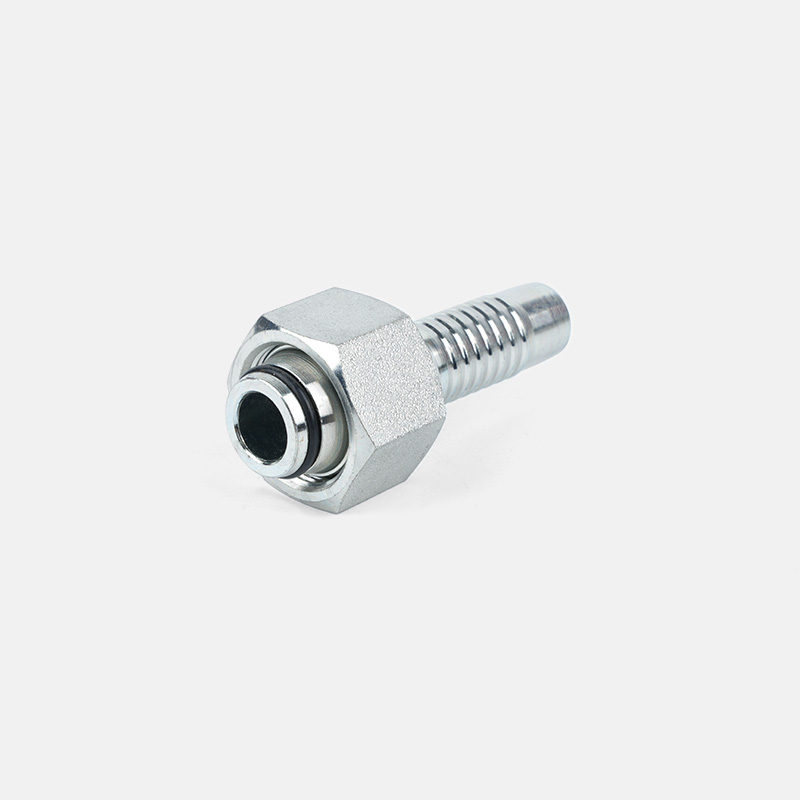
Types of hydraulic fittings with O-ring use a compressed elastomeric ring to create a leak-free seal. O-ring designs are considered the most reliable for high-pressure applications and account for the majority of modern hydraulic fittings and hoses assemblies. There are three main O-ring configurations:
- O-Ring Boss (ORB / SAE Straight Thread): The O-ring sits in a groove on the outside of the male fitting and seals against a smooth machined surface (boss) on the port face. Widely used on pump and valve ports in North America. Common sizes include -4, -6, -8, -10, -12 (dash sizes correlating to 1/4'', 3/8'', 1/2'', 5/8'', 3/4'' respectively).
- O-Ring Face Seal (ORFS): The O-ring sits in a groove on the flat face of the female fitting and seals against the flat face of the male fitting. This is the most leak-resistant design available and is preferred for high-vibration environments or wherever zero-leak performance is mandatory.
- O-Ring Flange (SAE Code 61 / Code 62): A 4-bolt flange configuration where the O-ring seals on a machined face. Code 61 handles up to 3,000 PSI; Code 62 handles up to 6,000 PSI. Used extensively on hydraulic pump hoses, large-bore manifolds, and heavy equipment.
Mated Angle (Metal-to-Metal) Seals
These sealing designs rely on two precisely machined metal surfaces pressing against each other at a specific angle. No O-ring is required for the primary seal. The three common seat angles are:
- 37° Flare (JIC — Joint Industry Council): The most common metal-to-metal seal in North American hydraulic lines and fittings. The male fitting has a 37° cone that seats into a matching female flare. JIC fittings use UNF threads and are highly reusable. A standard 1/2'' JIC fitting uses a -8 dash size with 3/4-16 UNF thread.
- 45° Flare: Common in refrigeration and lower-pressure fluid systems. Less common in high-pressure hydraulic fittings and hoses but still encountered on some older or OEM-specific equipment.
- 30° Cone (DIN / Metric): Used in European metric fittings (DIN 2353). The male fitting has a 24° cone with a captive O-ring in some designs, making it a hybrid metal-to-metal and O-ring seal.
Tapered Thread (Interference) Seals
NPT and BSPT fittings rely on the wedging action of tapered threads to create a seal. As the male tapered thread is tightened into the female, the threads deform slightly and create metal-to-metal contact. PTFE tape or pipe sealant is almost always required to ensure full sealing. This is considered the least reliable sealing method for high-pressure hydraulic applications and should not be used above 3,000 PSI without careful engineering review.
Step 4 — Perform Visual Analysis to Confirm Fitting Design
Once you have identified the probable sealing type, the next step is precise visual analysis of the fitting geometry. This step is where a hydraulic hose fitting chart becomes essential, as small dimensional differences can make two fittings look nearly identical while being functionally incompatible.
Key Visual Inspection Points
- O-ring presence and location: Is there an O-ring groove? Is it on the nose (ORB), on the face (ORFS), or absent entirely (JIC/NPT)?
- Nose shape: Is the seat angle a sharp cone (37° JIC), a wider flare (45°), or a flat face (ORFS)?
- Thread profile: Are the threads parallel (straight) or tapered (narrowing toward the end)? Use a taper gauge or straight edge to check.
- Thread angle: A 60° thread angle indicates UNF or NPT (North American standards). A 55° angle indicates BSP (British standards).
- Hex size: The wrench flat (hex) size can help cross-reference the fitting to a hydraulic hose fitting chart for size confirmation.
Using a Seat Gauge
For mated-angle fittings where the seat angle determines the standard (37° vs 45° vs 30°), a seat angle gauge is indispensable. Place the gauge against the male cone — the fit will be flush only at the correct angle. A misread of even a few degrees will result in a wrong fitting selection that may initially hold pressure but will fail prematurely under vibration or thermal cycling.
| Fitting Standard | Seat Angle | Thread Type | O-Ring? | Typical Use Case |
|---|---|---|---|---|
| JIC | 37° | UNF (Straight) | No | General hydraulic lines, mobile equipment |
| ORFS | Flat Face | UNF (Straight) | Yes (face) | High-vibration, zero-leak systems |
| ORB (SAE ST) | None | UNF (Straight) | Yes (boss) | Pump and valve ports |
| BSPP | Flat/Parallel | BSP (Straight) | Yes (bonded washer) | European equipment ports |
| NPT | None | Tapered | No (sealant needed) | Low-pressure, older systems |
| DIN (Metric) | 24° | Metric (Straight) | Optional | European OEM hydraulic systems |
| SAE Flange Code 61/62 | Flat Face | 4-bolt | Yes (face) | High-flow, high-pressure large bore |
Step 5 — Measure Thread Size to Complete the Identification
Even after identifying the fitting standard and sealing type, you must confirm the exact thread size to order the correct fitting. Thread sizes are expressed differently depending on the standard, and a wrong thread size will result in cross-threading or an immediate leak.
How to Measure Thread Size
Use a thread pitch gauge (also called a thread gauge or thread comb) to determine the number of threads per inch (TPI) for inch-based standards, or the thread pitch in millimeters for metric standards. Combine this with an outside diameter (OD) measurement of the male thread using calipers to pinpoint the exact size.
Common Thread Size Reference for Hydraulic Hose Fittings
| Hose ID | JIC Thread Size | ORB Thread Size | NPT Thread Size | BSPP Thread Size |
|---|---|---|---|---|
| 1/4'' | 7/16-20 UNF | 7/16-20 UNF | 1/4'' NPT | 1/4'' BSPP |
| 3/8'' | 9/16-18 UNF | 9/16-18 UNF | 3/8'' NPT | 3/8'' BSPP |
| 1/2'' | 3/4-16 UNF | 3/4-16 UNF | 1/2'' NPT | 1/2'' BSPP |
| 5/8'' | 7/8-14 UNF | 7/8-14 UNF | 1/2'' NPT | 1/2'' BSPP |
| 3/4'' | 1-1/16-12 UNF | 1-1/16-12 UNF | 3/4'' NPT | 3/4'' BSPP |
| 1'' | 1-5/16-12 UNF | 1-5/16-12 UNF | 1'' NPT | 1'' BSPP |
A Closer Look at 1/2'' Hydraulic Hose Fittings
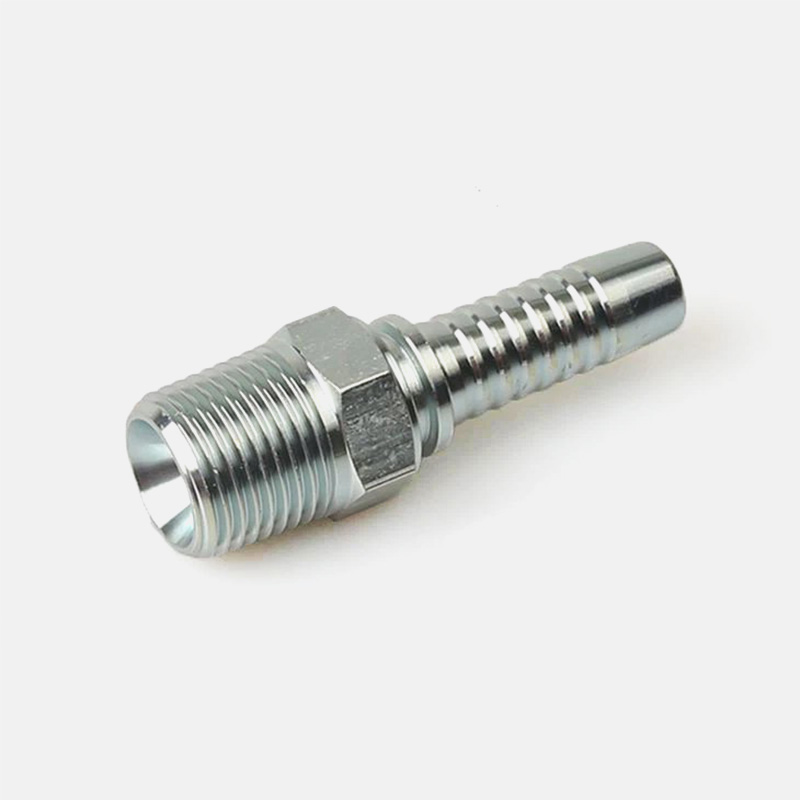
The 1/2'' size is among the most widely used in mobile and industrial hydraulic systems. For reference, 1/2'' hydraulic hose fittings in JIC configuration use a 3/4-16 UNF thread — meaning 3/4'' outer diameter with 16 threads per inch. In NPT configuration, the same hose uses a 1/2'' NPT fitting, which has 14 threads per inch (TPI). These two fittings will appear visually similar but are completely incompatible. Always measure with a gauge rather than guessing by visual comparison alone.
Types of Hydraulic Fittings with O-Ring: A Detailed Breakdown
O-ring sealing is the dominant sealing technology across modern hydraulic fittings and hoses. Understanding the differences between the three main types of hydraulic fittings with O-ring is essential for proper selection and installation.
O-Ring Boss (ORB) Fittings
ORB fittings, standardized under SAE J1926, use straight UNF threads and seal via an elastomeric O-ring compressed against a machined boss surface around the port opening. They are used extensively as port fittings on pumps, motors, cylinders, and valves. The O-ring provides a positive, vibration-resistant seal that does not rely on thread deformation. ORB fittings are not interchangeable with ORFS fittings even though both use straight threads — the O-ring location and sealing surface are completely different.
O-Ring Face Seal (ORFS) Fittings
ORFS fittings (SAE J1453) feature a flat-faced male end with a recessed O-ring groove. When tightened, the O-ring is compressed against the matching flat face of the female fitting, creating a highly reliable seal. ORFS is the standard of choice for high-vibration hydraulic lines and fittings in the construction, forestry, and mining industries. A properly installed ORFS fitting can reliably seal systems up to 6,000 PSI and is far less susceptible to loosening from vibration than JIC or NPT connections.
O-Ring Flange Fittings (SAE Code 61 and Code 62)
For large-bore, high-flow applications — such as the suction and return lines on large hydraulic pump hoses — 4-bolt O-ring flange fittings are the standard. Code 61 flanges handle pressures up to 3,000 PSI and are common on agricultural and industrial equipment. Code 62 flanges, with a higher-pressure bolt pattern, handle up to 6,000 PSI and are found on heavy construction and oil field machinery. The O-ring sits in a groove on the flange face and is compressed when the bolts are torqued to specification.
Hydraulic Lines and Fittings: Hard Line vs. Flexible Hose
Not all hydraulic connections use flexible hose. Understanding when to use rigid hydraulic lines versus flexible hose — and which fittings work with each — is important for designing or repairing a complete system.
Rigid Hydraulic Tubing
Steel, stainless steel, and copper tubing are used for hydraulic lines in fixed installations where vibration is minimal and routing is straightforward. Tube fittings use either flared ends (JIC 37° or DIN 24°) or compression-style connections (such as Swagelok-style). Rigid tubing can handle higher pressures for a given wall thickness compared to flexible hose and is preferred for long, straight runs in machine tools and stationary industrial equipment.
Flexible Hydraulic Hose
Flexible hose is required wherever there is relative movement between components — such as between a machine frame and a moving actuator, or at the connection to hydraulic pump hoses on a mobile unit. The flexibility also provides vibration damping, which reduces fatigue on port fittings and manifolds. Most mobile equipment — excavators, loaders, agricultural machinery — uses almost exclusively flexible hydraulic hose assemblies.
When routing hydraulic hoses, avoid bend radii tighter than the hose's specified minimum bend radius. For a common 1/2'' SAE 100R2 hose, the minimum bend radius is approximately 4.5 inches (115 mm). Exceeding this causes internal reinforcement damage and reduces the hose's pressure rating significantly.
Hydraulic Hose Fitting Chart: Quick Reference for Common Configurations
The following hydraulic hose fitting chart consolidates the key identification parameters for the most commonly encountered hose fitting types. Use this as a field reference when identifying fittings without access to original equipment documentation.
| Fitting Type | Seat / Seal | Thread | TPI (1/2'' size) | Max Pressure | Identification Tip |
|---|---|---|---|---|---|
| JIC 37° | 37° metal cone | UNF Straight | 16 | Up to 5,000 PSI | Shiny cone inside female swivel nut |
| ORFS | Flat face + O-ring | UNF Straight | 16 | Up to 6,000 PSI | O-ring groove visible on flat male face |
| ORB | O-ring on boss | UNF Straight | 16 | Up to 6,000 PSI | O-ring seated behind threads on male end |
| NPT | Tapered thread | NPT Tapered | 14 | Up to 2,000 PSI | Thread narrows toward end; needs sealant |
| BSPP | Bonded washer / O-ring | BSP Straight | 14 | Up to 4,000 PSI | 55° thread angle; parallel thread profile |
| BSPT | Tapered thread | BSP Tapered | 14 | Up to 2,000 PSI | 55° angle; thread tapers toward end |
| SAE Flange 61 | O-ring face | 4-bolt SAE | N/A | Up to 3,000 PSI | 4-bolt pattern; O-ring on flat flange face |
| SAE Flange 62 | O-ring face | 4-bolt SAE | N/A | Up to 6,000 PSI | Compact 4-bolt; smaller bolt circle than Code 61 |
| DIN 24° Metric | 24° cone ± O-ring | Metric Straight | Metric pitch | Up to 6,000 PSI | Metric hex sizes; common on European equipment |
Hydraulic Pump Hoses: Special Considerations
Hydraulic pump hoses — the lines that connect a hydraulic pump to the reservoir (suction line) and to the system (pressure line) — have specific requirements that set them apart from typical working-line hoses.
Suction Lines
The suction line carries fluid from the tank to the pump inlet and operates under negative pressure (vacuum). Standard hydraulic hose will collapse under vacuum, so suction lines must use reinforced suction hose with a wire helix or rigid inner liner that prevents collapse. Fittings on suction lines are typically large-bore flanges (SAE Code 61) or barbed/clamped designs, as the pressure rating requirement is low but flow volume is high.
Pressure Lines
The pressure line from the pump outlet to the first control valve carries full system pressure and typically uses high-pressure wire-braided or spiral hose matched to the pump's maximum output. For a pump rated at 3,000 PSI with a safety factor of 4:1, the hose burst pressure rating should be at least 12,000 PSI. Standard SAE 100R2 or 100R12 hose with JIC, ORFS, or ORB fittings is appropriate for most mid-range applications.
Case Drain Lines
Piston pumps and hydraulic motors typically have a case drain port that returns internal leakage fluid to the tank under very low pressure (under 25 PSI). However, these lines must be sized generously to prevent back-pressure buildup, which can damage shaft seals. Low-pressure hose with barb or push-lock fittings is commonly used here.
How to Avoid the Most Common Mistakes When Fitting Hydraulic Hose
Even experienced technicians encounter problems when fitting hydraulic hose if they skip steps or rely on visual guesswork alone. Below are the most frequent errors — and how to avoid them.
- Mixing thread standards: NPT and BSPT are visually similar but dimensionally incompatible. Always use a thread gauge — never assume based on appearance alone. Forcing a 14 TPI NPT fitting into a 14 TPI BSPT port (or vice versa) will appear to thread in but will leak immediately or fail under pressure.
- Confusing JIC and ORFS: Both use UNF straight threads in the same dash sizes, but JIC has a 37° cone seat while ORFS has a flat face with an O-ring. Installing one where the other is required will result in an incomplete metal-to-metal seal or a missing O-ring — both causing leaks.
- Over-tightening NPT or BSPT fittings: Tapered thread fittings seal by thread deformation. Excessive torque cracks the female port, especially in aluminum or cast iron manifolds. Standard practice is to tighten 2–3 turns past hand-tight (TPHT) for NPT fittings in steel ports.
- Using PTFE tape on O-ring fittings: ORB and ORFS fittings seal with an O-ring, not with thread sealant. Adding PTFE tape to these fittings prevents the O-ring from seating correctly and can actually cause leaks.
- Exceeding minimum bend radius: Crimping a hose at too tight a bend near the fitting stresses the hose attachment point and leads to premature hose failure. Always allow a straight section of at least 1.5× the hose OD before any bend at the fitting end.
- Ignoring pressure ratings: Using a lower-pressure hose or fitting in a high-pressure line because it "fits" physically is dangerous. Always verify that both the hose and the fitting are rated above the system's maximum working pressure — ideally by a safety factor of 4:1.
Material Selection for Hydraulic Fittings and Hoses
The material of a hydraulic fitting affects its corrosion resistance, pressure rating, weight, and compatibility with hydraulic fluid. The most common materials used in hydraulic fittings and hoses assemblies are:
- Carbon Steel: The standard material for most hydraulic hose fittings. Steel fittings offer excellent pressure ratings (suitable for 6,000+ PSI applications) and are the most economical choice. They must be plated or coated to resist corrosion — typically with zinc, zinc-nickel, or black oxide finishes.
- Stainless Steel: Used where corrosion resistance is critical — marine environments, food processing, chemical plants. Stainless steel hydraulic connector types cost significantly more than carbon steel but offer superior longevity in harsh environments. Rated for the same pressure ranges as carbon steel in most configurations.
- Brass: Common in low-to-medium pressure hydraulic fittings and hoses used in instrumentation, fuel lines, and water-based fluids. Brass is self-lubricating and corrosion-resistant but has a maximum pressure rating around 3,000 PSI for most sizes — unsuitable for high-pressure mainline hydraulics.
- Aluminum: Lightweight and corrosion-resistant, aluminum fittings are used in aerospace and lightweight mobile equipment where weight savings are critical. They have lower pressure ratings than steel and can gall if overtightened.
Material Max Pressure (typical) Corrosion Resistance Relative Cost Best Use Carbon Steel (zinc plated) 6,000+ PSI Moderate Low General industrial / mobile hydraulics Stainless Steel 6,000+ PSI Excellent High Marine, chemical, food processing Brass 3,000 PSI Good Medium Low-pressure, instrumentation Aluminum 3,000 PSI Good Medium Lightweight aerospace / motorsport
Practical Tips for Fitting Hydraulic Hose in the Field
Knowing how to identify the right fitting is only half the job. Proper installation technique ensures that hydraulic fittings and hoses perform reliably over their full service life.
Assembly Preparation
- Always cut hose squarely using a dedicated hydraulic hose saw. A ragged cut compromises the crimp seal.
- Clean the hose bore after cutting to remove rubber particles. Even small debris can damage pump or valve internals.
- Lubricate the hose end before inserting it into the fitting shell — use hydraulic fluid or the lubricant recommended by the fitting manufacturer.
Crimping
- Always set the crimp diameter to the exact specification listed in the fitting manufacturer's crimp chart — this varies by hose type, hose OD, fitting series, and shell material.
- Measure the finished crimp OD with calipers and compare to the specified value. A tolerance of ±0.010'' is typically acceptable.
- Never use a fitting shell from one manufacturer with a stem from another — crimp specifications are manufacturer-specific.
Installation Torque
Correct installation torque is critical for O-ring fittings. Under-torquing leaves the O-ring incompletely compressed; over-torquing extrudes the O-ring and can cause immediate failure. Below are reference torque values for common hydraulic fitting sizes:
| Fitting Size (Dash) | Hose ID | JIC Torque (ft-lb) | ORFS Torque (ft-lb) | ORB Torque (ft-lb) |
|---|---|---|---|---|
| -4 | 1/4'' | 11–13 | 11–13 | 10–12 |
| -6 | 3/8'' | 18–20 | 18–20 | 18–22 |
| -8 | 1/2'' | 38–42 | 38–42 | 40–50 |
| -10 | 5/8'' | 55–65 | 55–65 | 55–65 |
| -12 | 3/4'' | 80–90 | 80–90 | 75–85 |
| -16 | 1'' | 100–120 | 100–120 | 100–115 |
Hydraulic Connector Types for Specialty Applications
Beyond the standard thread-type and flange-type fittings described above, several specialty hydraulic connector types are worth knowing for specific applications.
Quick-Disconnect Couplings
Quick-disconnect (or quick-release) couplings allow hydraulic lines to be connected and disconnected without tools and without significant fluid spillage. They are available in multiple configurations (ISO 7241-A, ISO 7241-B, flat-face, agriculture style) and are widely used on tractor hydraulics, skid steer attachments, and test equipment. Flat-face quick couplings are preferred in sensitive environments because they minimize fluid loss and air ingestion upon disconnection.
Swivel Fittings
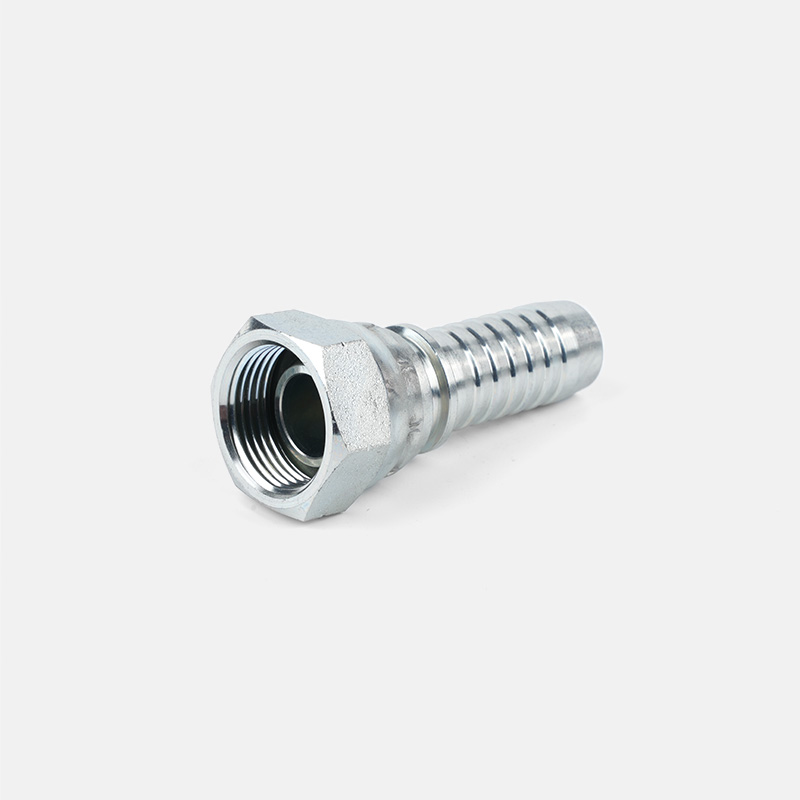
Swivel fittings allow the hose to rotate at the connection point after installation, reducing hose twist and stress during routing. They are particularly useful on hydraulic pump hoses and lines that must be routed around obstacles. Swivel JIC and swivel ORFS fittings are the most common configurations.
Banjo Fittings
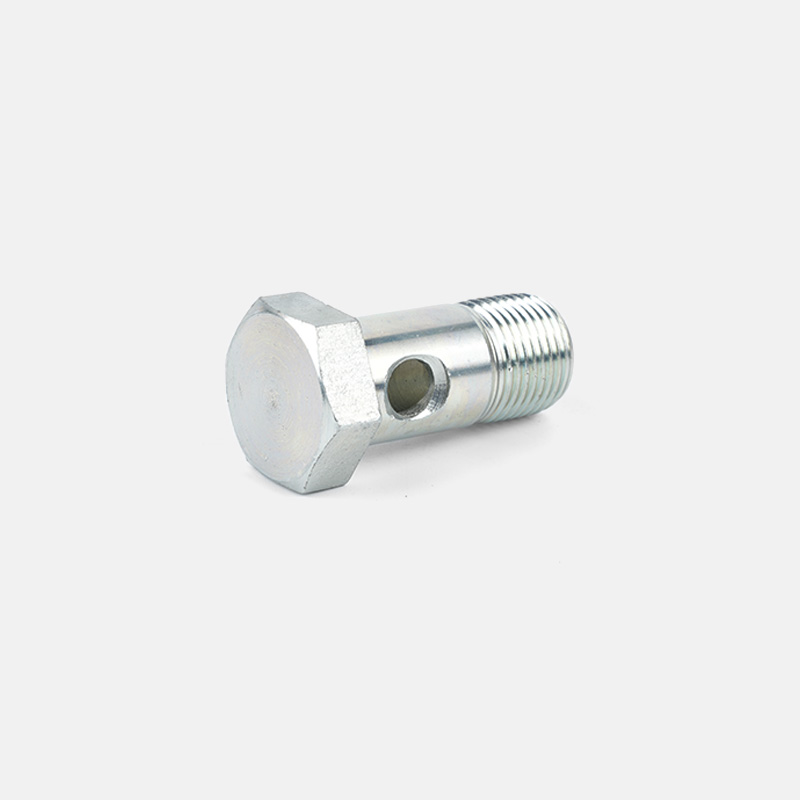
Banjo fittings feature a hollow bolt passing through a circular fitting body, allowing fluid to flow through the bolt into a port. They allow the hose to exit at a 90° or other fixed angle from a port that has limited clearance. Common in automotive power steering systems and compact hydraulic circuits.
Metric DIN Fittings
European and Asian-manufactured equipment frequently uses DIN 2353 (ISO 8434-1) compression fittings for rigid tube and metric BSP or Metric O-ring fittings for hose ends. When working on imported machinery, always verify whether the equipment uses metric or inch standards before ordering replacement hydraulic fittings and hoses.
Summary: The 5-Step Process to Determine Proper Hydraulic Hose Fittings
To summarize the complete process for determining proper hydraulic hose fittings, follow these five steps every time:
- Determine fitting attachment type: Decide between permanent (crimped) and reusable fittings based on the application, available tools, and whether the assembly is new or legacy equipment.
- Identify port connection standard: Match the port type on the equipment (pump, valve, cylinder) — JIC, ORB, ORFS, NPT, BSPP, BSPT, Metric, or SAE Flange — to the correct hydraulic fitting type.
- Identify the sealing method: Determine whether the seal is an O-ring boss, O-ring face seal, mated angle (37°, 45°, 30°), or tapered thread. Use a seat angle gauge where necessary.
- Perform visual analysis: Inspect seat geometry, O-ring presence/location, thread profile (tapered vs. straight), and hex sizes to confirm the fitting design against a hydraulic hose fitting chart.
- Measure thread size: Use a thread pitch gauge and calipers to confirm TPI and OD. Cross-reference with the correct standard's thread chart to confirm the exact designation (e.g., 3/4-16 UNF for a -8 JIC fitting on a 1/2'' hydraulic hose).
Following this process eliminates guesswork and ensures that every hydraulic hose assembly — whether a simple 1/2'' hydraulic hose fitting on a log splitter or a high-pressure ORFS assembly on a mining excavator — is correctly identified, properly installed, and safe for service.
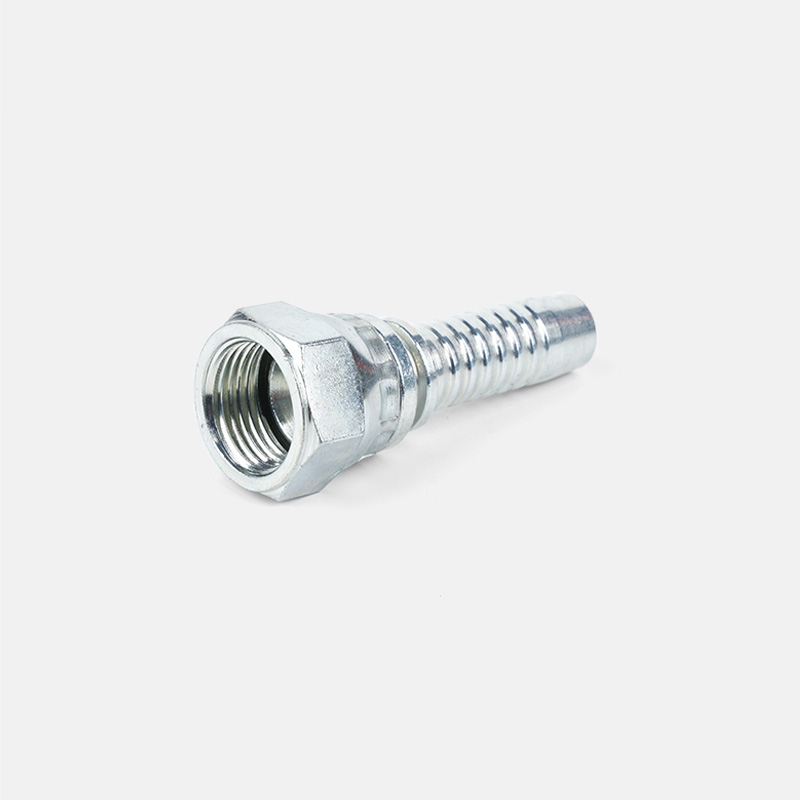
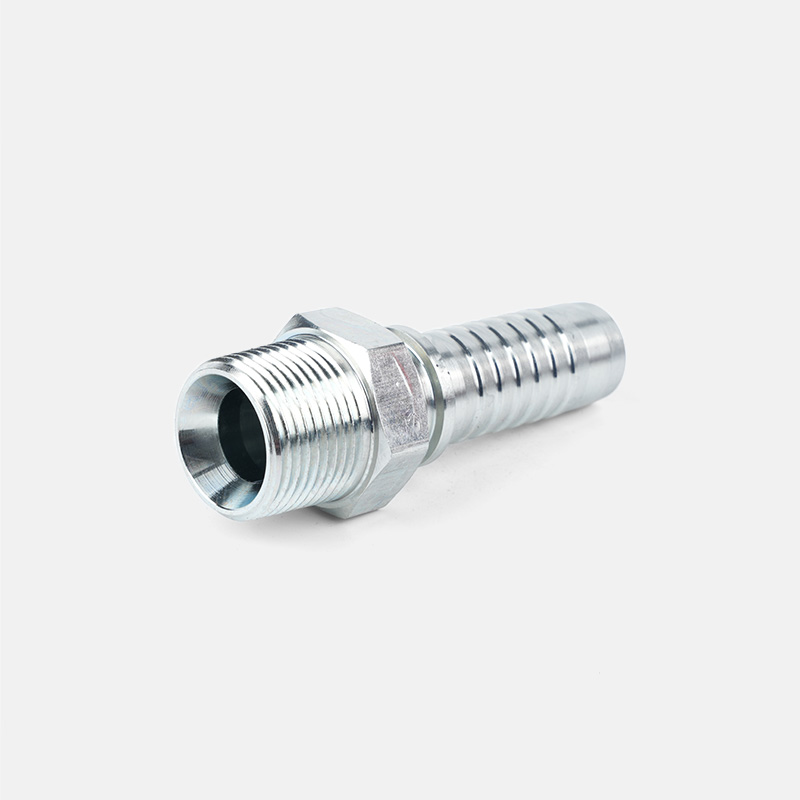
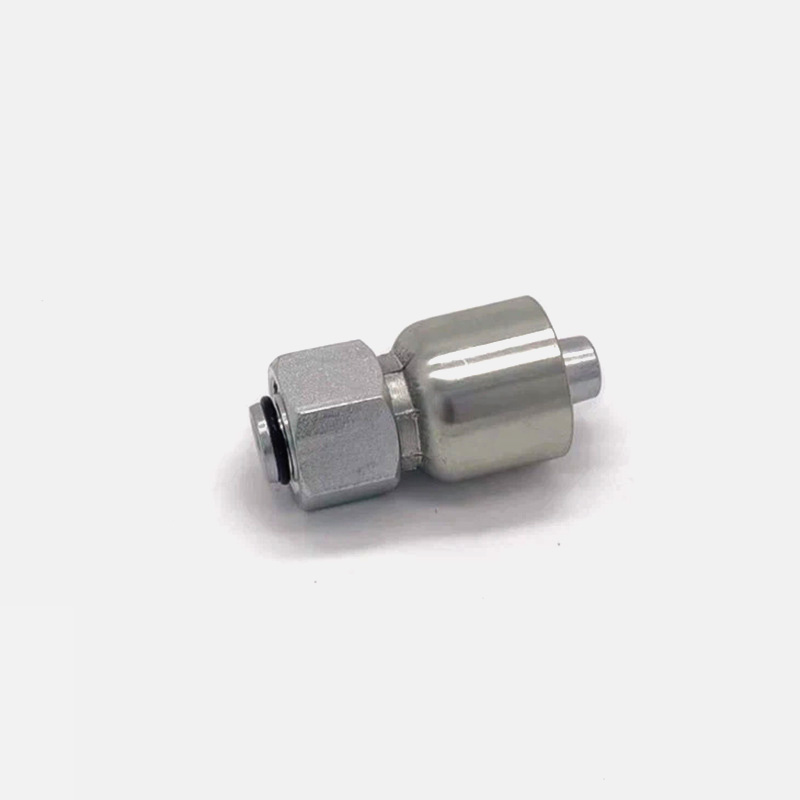
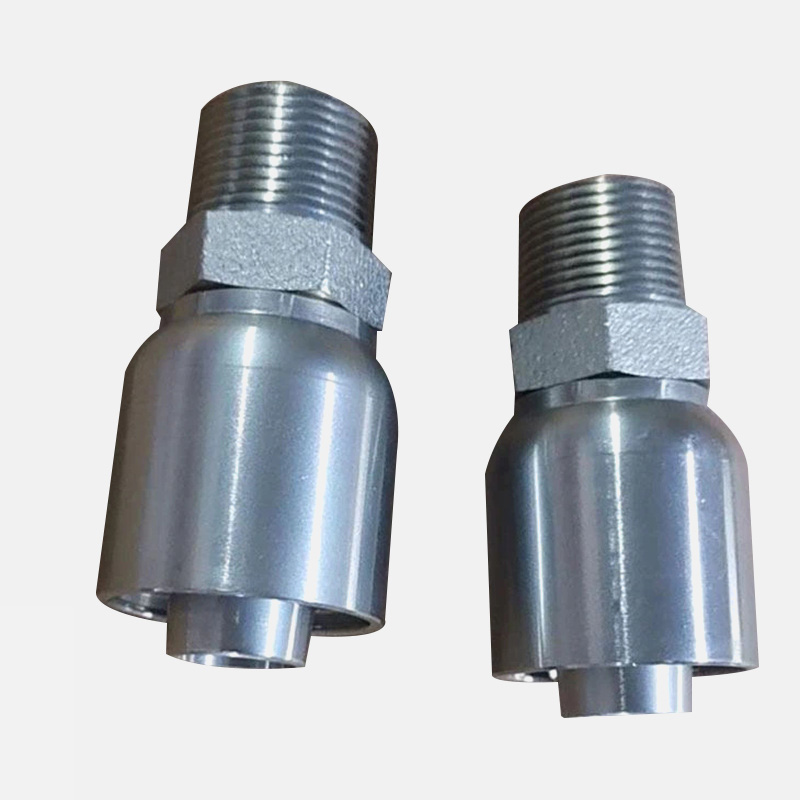

Custom hydraulic accessories
From concept to production, we can create the products you want
Products
Contact Information
-

Tel: +86-159-6851-8588
-

E-mail: [email protected]
-

Add:Zhu Jia Station Village, Diankou Town, Zhuji City , Zhejiang Province, China
